
When Ali Hazelwood announced she was writing vampires and werewolves, the internet collectively went… are you sure about that?
This is the STEM queen. The goddess of banter. The lover of giant men. The connoisseur academia flirting.
It should not have worked as cleanly as it did. And yet. It completely does.
If you walked into this book expecting dark, morally grey, blood soaked urban fantasy with savage pack politics and betrayal at every turn, you may find this too polished. Too controlled.
Buuuut… if you grew up inhaling early 2000s paranormal romance and miss competent alphas and political marriage tension that is actually satisfying, you are going to feel very at home.
This is not epic romantasy. It is paranormal romance with structure. And it’s definitely a book for someone.
Takeaways
- Bride by Ali Hazelwood is a paranormal romance with marriage of convenience, vampires and werewolves, and moderate open door spice.
- It is tighter and more structurally controlled than Mate, with clearer pacing and cleaner execution.
- The tone leans heavily into early 2000s urban fantasy revival rather than dark romantasy.
- Lowe is competent and emotionally steady, not morally grey or dangerous.
- Best suited for readers who want romance first, politics second.
At a Glance
Author: Ali Hazelwood
Series: Standalone, shared universe with Mate
Publisher: Berkley
Published: February 6, 2024
Pages: 410
Genre: Paranormal romance / Urban fantasy
POV: Single, Misery
Should I Read Bride?
Read it if:
- You love marriage of convenience.
- You miss early 2000s vampire and werewolf paranormal romance.
- You want a competent, emotionally steady alpha.
- You prefer slow burn with payoff rather than chaos.
- You are here for romance first and politics second.
- You do not need devastating angst to feel tension.
Skip it if:
- You want dark, morally grey romance.
- You expect epic fantasy level political complexity.
- You dislike detached, dry narrators.
- You need extreme emotional devastation.
- You are chasing shadow daddy menace.
Feel & Tropes
Genre: Paranormal romance
Romance: Slow burn
Spice: Moderate, open door
Tone: Sharp, sarcastic, nostalgic
Tropes:
- Marriage of convenience
- Vampire x werewolf
- Political alliance
- Forced proximity
- Found family
- Missing best friend
- Knotting
Darkness level: Mild
Ending: Satisfying, contained, sequel ready world
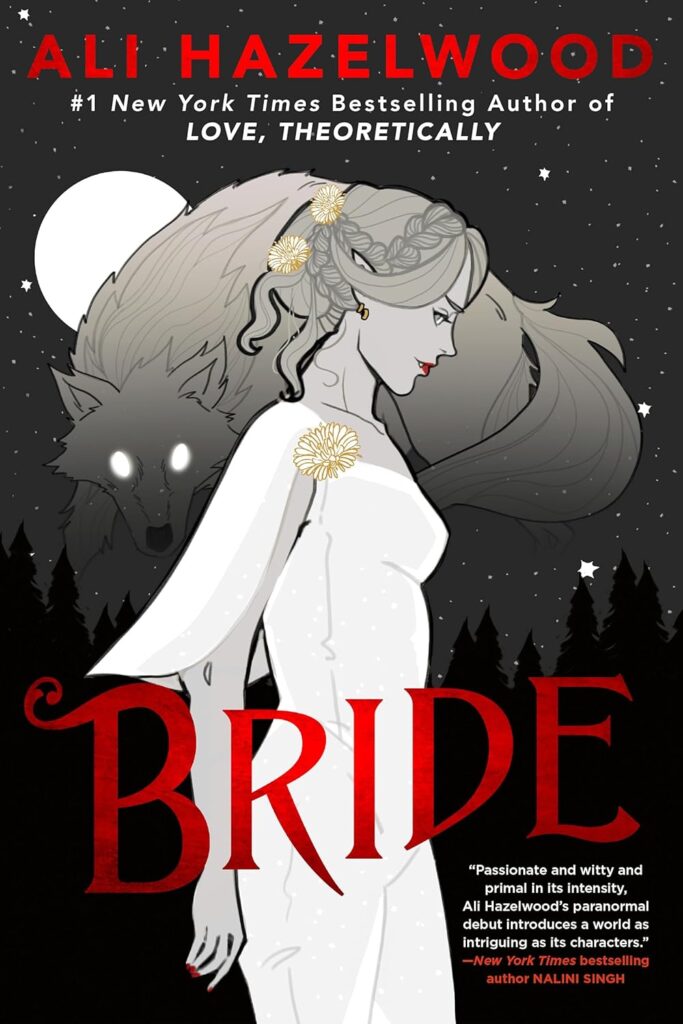
The Tone? Urban Fantasy First, Romcom Second
This is not fae court romantasy or gothic horror. This is urban fantasy with councils, modern tech, and interspecies politics. Just streamlined. Clean. Commercial in the smartest way.
If you read early 2000s paranormal romance, you will clock the lineage instantly. Think of the rhythm of Bitten, with mystery, investigating, and kidnapping. Add another strong heroine. Pack politics. Controlled steady alpha and tension built through proximity rather than spectacle.
Having said that, Hazelwood for sure modernises the framework. The heroine is intelligent and observant and the politics are present but not labyrinthine-like. The grim edges are softened compared to a lot of romantasy you see on the shelves these days. Some readers may think this is too safe, but I think it’s smart positioning considering what Ali is known for.
What Is Misery Like?
Misery Lark is sharp and emotionally contained, you won’t see her as a dramatic, emotional female character.
- She is not sunshine.
- She is not chaotic.
- She is not trying to win anyone over.
And that makes sense because she was raised as political collateral between species. That detachment she shows therefore feels earned. It reads like a coping mechanism, not a personality quirk, and there is even some self awareness thrown in.
The MCs voice is dry, slightly sardonic, and millennial coded. That will divide readers. If you dislike modern dialogue rhythms in paranormal settings, it will especially annoy you.
However, if you enjoy capable female leads who do not spiral dramatically every five pages, she works.
And crucially, she does not beg to be chosen or feel as if “love will heal her.”
What Is Misery Like?
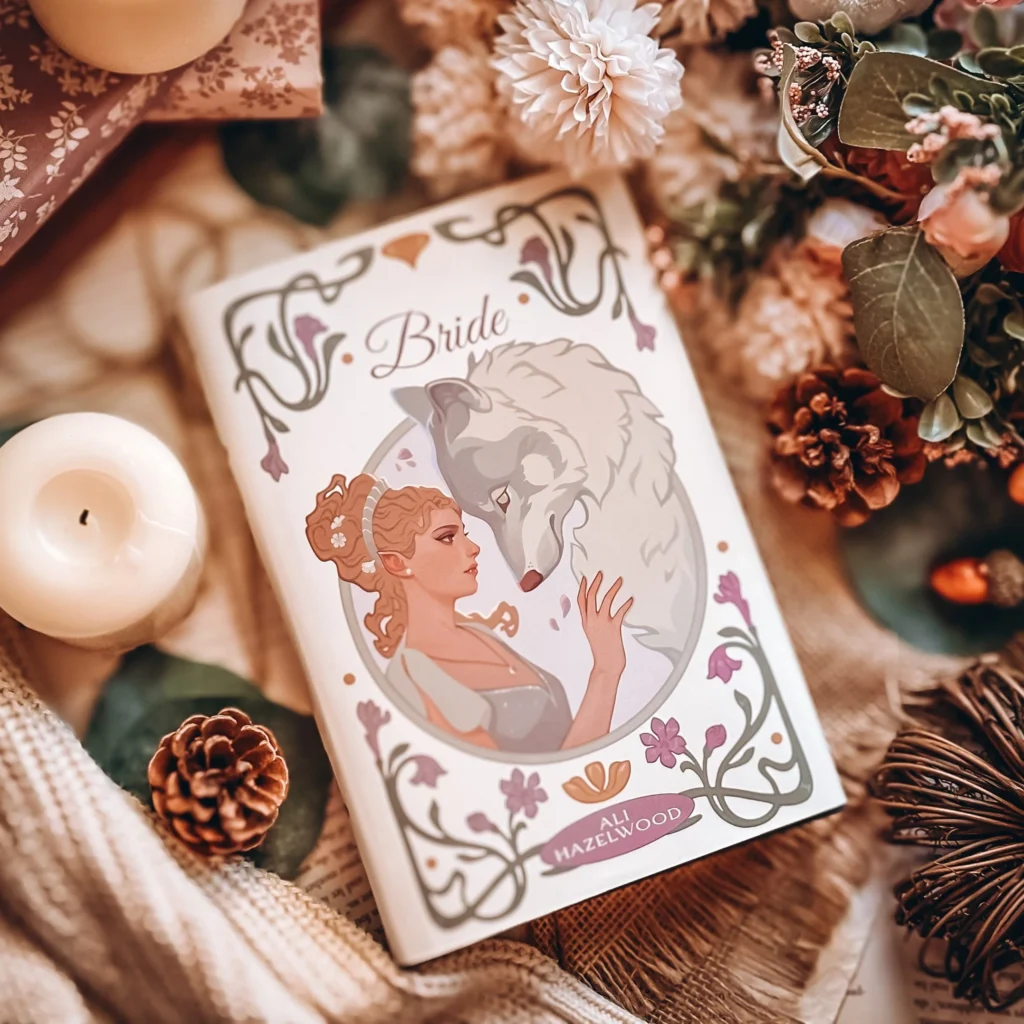
psst…find this cover and art work copy at owlcrate!
Misery Lark is sharp and emotionally contained, you won’t see her as a dramatic, emotional female character.
- She is not sunshine.
- She is not chaotic.
- She is not trying to win anyone over.
And that makes sense because she was raised as political collateral between species. That detachment she shows therefore feels earned. It reads like a coping mechanism, not a personality quirk, and there is even some self awareness thrown in.
The MCs voice is dry, slightly sardonic, and millennial coded. That will divide readers. If you dislike modern dialogue rhythms in paranormal settings, it will especially annoy you.
However, if you enjoy capable female leads who do not spiral dramatically every five pages, she works.
And crucially, she does not beg to be chosen or feel as if “love will heal her.”
What Is Lowe Like?
Expectations matter here when you’re going into this novel. He’s not a really scary werewolf type, and he isn’t especially morally grey. But he feels safe and steady in the way a pack leader should.
Some positives are that he leads strategically. He thinks long term. He prioritises his pack. He does not posture for dominance theatre.
But if you are coming in hoping for something in the realm of a Damon Torrance archetype, you will find Lowe soft. If you are tired of unhinged alpha theatrics, you will probably find him refreshing.
The chemistry builds ultimately through respect, which is cool to watch. Even from the start, you believe they could love each other, so it is semi instant, and yet feels really earned by the end.
Does the Plot Have Bite?
Conceptually? Yes.
Vampire council daughter. Check.
Werewolf alpha marriage. Double check.
A missing best friend? Here for the drama.
Species corruption. Check, check, and check.
Execution wise, it is streamlined, it is what it says on the tin.
The politics create tension without becoming dense. The missing friend storyline adds urgency without tipping into devastation. But the mystery isn’t very complicated. This isn’t a book where you have to set up a conspiracy board in your front living room fit with red string and crude print outs.
You are meant to move through it. Ultimately, it knows it’s romance first.
Is Bride Dark?
Not really.
Despite:
- Political bargaining
- Being traded into marriage
- Kidnapping
- Species corruption
The tone never turns grim or brutal. Hazelwood could have pushed much harder into the trauma of being used as collateral but she chooses accessibility instead. That is a tonal decision, not a flaw, and if you’re looking for something trauma heavy that deals in trafficking (like HD Carlson) this isn’t it.
Is Bride Spicy?
Yes. I mean, there is knotting, open door intimacy, and a whole host of sexy scenes.
It doesn’t overwhelm the narrative, though. If you’re looking for something that has a lot of spicy scenes that are unforgettable, I wouldn’t say Bride is the best example of this. But it is hot.

Why Are Reactions So Divided?
Readers who wanted:
- Dark urban fantasy
- Morally grey dominance
- Brutal stakes
Were disappointed.
Readers who wanted:
- Nostalgic paranormal romance
- Competent alpha leadership
- Marriage tension
- Supernatural politics with structure
Had a really fun time.
Is It Actually Good?
Here is the honest answer. It doesn’t redefine paranormal romance, but it does give it a modern edge that’s refreshing. It’s structurally tight, and does what it sets out to do. It truly feels like a deliberate revival of early 2000s urban fantasy romance for a modern audience who maybe never read that era the first time around.
It’s smart.
Gilt Score: 78 / 100
Worldbuilding and structural clarity give it an edge over Mate. 1 is a low score and 15/20 is high.
- Worldbuilding: 11/15
- Plot & Stakes: 11/15
- Romance Execution: 16/20
- Chemistry: 15/20
- Character Depth: 11/15
- Prose & Voice: 8/10
- Originality (revival factor considered): 6/10
Reader Fit Index
(1 low – 10 high)
- New to paranormal romance: 9/10
- Dark romance lovers: 4/10
- Spice seekers: 7/10
- Urban fantasy nostalgia readers: 10/10
- Epic fantasy readers: 3/10
- Marriage of convenience lovers: 9/10
Frequently Asked Questions
Yes — it has a complete story with a satisfying ending and no cliffhanger. It shares a universe with Mate, and Misery and Lowe appear as supporting characters in that book, but you can read either one independently without losing anything important. If you’ve already read Mate, reading Bride first retroactively adds some texture to those cameos.
No, but reading Bride first is the better experience. Misery and Lowe appear in Mate as established characters, and knowing their history makes those moments land differently. Neither book spoils the other in a catastrophic way, but the intended reading order is Bride then Mate.
Paranormal romance, technically. There are vampires, werewolves, councils, and species politics — but it’s set in a modern world with contemporary technology and dialogue. It sits in the urban fantasy tradition rather than high fantasy or epic romantasy. If you’re expecting fae courts, dragons, or magic systems, adjust your expectations before you start.
If you’re new to paranormal romance and want a clean, satisfying entry point, this is one of the best places to start.
Many readers say, yes — it’s tighter in structure, cleaner in execution, and the chemistry is more balanced. Mate has more chaos and a more divisive hero. If you’re a wolf person over a vampire person, Mate may edge ahead for you personally. But as an overall reading experience, Bride is the stronger book and the better starting point in this universe.
A trope borrowed from omegaverse and werewolf romance where the male character has a physical tie during intimacy — essentially a biological knot. It’s a common feature in shifter and paranormal romance and leans into the animalistic nature of the genre. If you’re new to it, Bride handles it in a way that’s explicit but not shocking. If the concept doesn’t appeal to you, it’s worth knowing it’s in there before you start.
No. Bride is published by Berkley, a traditional publisher, which makes it ineligible for Kindle Unlimited. You’ll need to purchase it or borrow it through your library’s Libby or Overdrive app. If you’re looking for Ali Hazelwood’s work in KU, check her backlist of shorter STEM romances — some of those have been available there.
Not in the way BookTok often implies. Lowe is not a morally grey anti-hero — he is a competent, strategic pack leader who makes hard decisions but operates with a clear ethical framework. If you want a hero who does genuinely questionable things and doesn’t apologise for them, he will read as too clean. If you’re tired of “morally grey” being used as an excuse for a hero who’s just rude, Lowe is a very refreshing alternative.