
A lot of readers were shocked to find out that Frieda McFadden had made the shortlist for the Nibblies 2026 for Crime & Thriller/Best Author. But I’m not one of them because once you look at what the British Book Awards are actually judging, Freida McFadden’s nomination is not weird at all. In fact, it makes sense.
The award’s own Book of the Year criteria say the judges are looking for a combination of creative genius, brilliant publishing, and fantastic sales or chart success, including sustained sales across the year. If that isn’t Freida McFadden, then I don’t know what is. She has a very specific niche of thrillers with double plot twists, a familiar female voice for each lead, a specific way of writing, and an easy, addictive style. Her books are exactly what writing to market is supposed to be, and how do you measure creativity anyway? At the end of the day, the British Book Award committee are fully aware of that broader trade-aware view.
Therefore, McFadden was recognised twice: The Tenant was shortlisted for Crime & Thriller Book of the Year, and she was also shortlisted for Author of the Year. We also can’t forget that Housemaid came out this year, meaning her books might take the screen by storm, too. Whether you’re a fan or not (I read McFadden’s books, but she’s not my top 10 author, more a read for a fun time gal), she’s successful at what she does.
Takeaways
- I love writers of all kinds; as a developmental editor, writer, and reader of everything, I have a unique take on the industry compared to most readers.
- Freida McFadden is nominated because the British Book Awards do not judge prose in isolation.
- The award explicitly values a mix of writing, publishing execution, and sales impact.
- In 2026, The Tenant made the Crime & Thriller shortlist, and McFadden also received an Author of the Year nomination.
- The shortlist commentary itself talks about reach, positioning, audience targeting, and chart performance, not just literary style.
- You do not need to think she is the greatest stylist alive to admit the nomination is perfectly defensible.

What are the British Book Awards actually judging?

They are judging the whole publishing journey, not just the writing on the page. The British Book Awards say that to win a Book of the Year award, a title needs some combination of the author’s creative brilliance, strong publishing, and major sales or chart success. They even spell out that unusual positioning, smart publication strategy, and sustained commercial performance matter.
It’s a pretty sensible award to run, and it’s absolutely needed in the larger breadth of awards, after all, we need someone to recognize gate way books that are quick and easy and pull people back into reading. That’s how many of us began, and how many are coming back to the dark side of Kindles, Kobos, and late-night binge fests.
Why are readers confused about Freida McFadden’s nomination?
First, many readers are concerned that the Nibbies 2026 award would prop up Frieda’s work as literary masterpieces, the likes of the Great American Novel. The books are not that, just FYI, if you haven’t read them. Many are concerned that when an author with huge commercial momentum, fast plotting, broad appeal, and distinctly mass market packaging gets nominated that it means literary standards have dropped. It’s the slippery slope of stories…if we shout out books like this, will more people try to write them? Will “good”, “poetic” writers lose out on opportunities?
The issue with that line of thought is that no one else can write a Frieda McFadden book, with her name on the cover and her legacy of trust that she will always fulfil the story promise. Like many popular businesses that work in online spaces, she has niched down and niched down. Poetic writers would have an entirely different niche.
Secondly, a lot of readers hear “book award” and immediately think of a pure literary merit test. Which is fair enough, we should all have some standards, especially with gross AI-written slop poking its way into the market. But the British Book Awards is much closer to the UK-specific publishing industry than it is readers. Ultimately, they are interested in the relationship between book, publisher, market, visibility, and readers. Not stunning literary masterpieces.
In the end, a lot of the irritation around the Freida McFadden British Book Awards nomination seems to come from a familiar hierarchy. If a book is wildly popular, aggressively marketable, easy to pitch, or massively visible on TikTok and digital retail channels, some readers decide it must be lesser. Not different. Not built for a different audience. Lesser.
Which stems from the idea that whatever young women and teenage girls love must also be vapid and lesser. There is a certain sort of online reader who hears “commercial fiction” and immediately translates it into “artistically fake”. That is such a dead-end way to talk about books. Plenty of commercial fiction is cleverly structured, ruthlessly audience-aware, and actually hard to pull off. Making a book massively readable is not an accidental byproduct. It is a skill. Sometimes a bloody difficult one.
Does Freida McFadden fit the British Book Awards criteria?
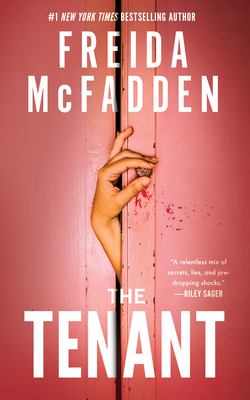
The shortlist page for Crime & Thriller Book of the Year 2026 says McFadden had nine thrillers in the Official UK Top 50 of 2025, and that The Tenant delivered the strongest opening week sales of her career to date. It also points to specific campaign choices like influencer mailings to creators with a combined reach above 813,000 followers, plus advertising through the true crime podcast They Walk Among Us to target genre-specific listeners. That is textbook evidence for sales impact, market visibility, audience understanding, and effective publishing execution.
And this is exactly why the nomination makes sense under the published criteria. The award is not separating “the book” from “how it was brought to market”. It is evaluating the whole machine from concept, to positioning, packaging, campaign, discovery, momentum, and reader uptake. McFadden and her team are extremely good at those things. You do not have to personally love the books to recognise that.
Would she fit every literary prize? Obviously not. Lordy. But that is not an argument against this nomination. It is an argument for reading the room and, ideally, the criteria.
Are people using the wrong standard for this award?
People are judging an industry-facing prize as if it were a pure artistic purity contest. That mismatch is what creates the outrage.
If you apply the standards of a prize that focuses narrowly on prose innovation, formal complexity, or literary prestige, then sure, you might look at Freida McFadden and say, “Really?” But if you apply the standards the British Book Awards actually publish, the question changes. Then you ask, well, did Frieda come up with a creative idea that would sell or get people talking? Did this book reach readers? Did the campaign work? Did the publisher position it brilliantly? Did it sustain commercial traction? Did it show a strong understanding of her audience and market? Under that framework, the answer looks much closer to yes.
Publishing is not just manuscripts floating in a holy void. Books reach readers through covers, hooks, metadata, retailer support, publicity, online word of mouth, price positioning, format strategy, timing, rights momentum, and plain old market instinct. Some books are excellent in a quiet way. Some are excellent at becoming events. The British Book Awards are unusually open about valuing the second kind of excellence, too. Which is cool of them.
Do sales and publishing campaigns belong in book awards?
For this award, yes, absolutely. The British Book Awards are built to recognise books as cultural and commercial successes, not merely as isolated works of art. Their own language says as much.
I know some readers hate that idea because it feels grubby. Money, marketing, sales charts, retailer presence, consumer buzz, all that stuff can seem like the ugly side of books. But books are published objects, sold to real people in a real market. Someone had that brilliant idea, and it worked to give a writer a career. There are plenty of writers out there who dream of this, so they can write their literary masterpieces on the side using a pen name, switch genres later with weight behind their name, take their time, and make money doing what they love. Good examples of this are Ali Hazelwood and Rebecca Yarros, who both started with very niched-down romance novels.
What does the past Crime & Thriller category tell us?
Recent winners and shortlists show a mix of big names, broad appeal titles, and books with strong trade energy. Hunted by Abir Mukherjee won the 2025 Crime & Thriller award, while the 2025 shortlist also included Richard Osman, Claire Douglas, Chris Whitaker, Susie Dent, and Nicci French. Earlier winners include The Woman Who Lied by Claire Douglas in 2024 and The Dark Remains by Ian Rankin and William McIlvanney in 2022.
This is not a category reserved for one narrow idea of “serious” crime fiction. The 2026 shortlist write-up literally says the books span from cosy crime to edge-of-your-seat thrillers and that it includes mega brands alongside debuts. In other words, breadth is built in.
So, is the Freida McFadden British Book Awards nomination ridiculous?
No. It is only ridiculous if you insist on ignoring the award’s own criteria.
You can dislike her writing. You can think another thriller writer was more elegant, more layered, more emotionally complex, more your thing, and most would likely agree with you, honestly. But we should do the work to uplift writers and readers of all types, as long as the work isn’t completely awful (I’m looking at you ChatGPT-written novels).
I think it comes down to the word “best” in the title. That is why so many people are confused about the Freida McFadden nomination discourse. They are not just arguing about one author. They are arguing about what “best” ought to mean. The British Book Awards have one answer, but a lot of online readers have another.
Frequently Asked Questions
Because the British Book Awards judge more than prose alone. Their Book of the Year criteria explicitly combine creative merit, publishing quality, and sales or chart success, and McFadden’s The Tenant fits that model very clearly.
In 2026, The Tenant was shortlisted for Crime & Thriller Book of the Year, and McFadden was also shortlisted for Author of the Year.
For Book of the Year, the awards say judges are looking for a mix of the author’s creative talent, brilliant publishing, and fantastic sales or chart success, including sustained performance across the year.
Mostly because many readers assume all awards are judging pure literary quality. When a trade facing award recognises a commercially dominant author with major market reach, some people treat that as proof standards have slipped, when it may just mean the award is using a different definition of “best”.
In some awards, yes. Not all. The British Book Awards openly include publishing execution and commercial success as part of their criteria, so sales and campaign strength are not side issues here. They are part of what is being rewarded.