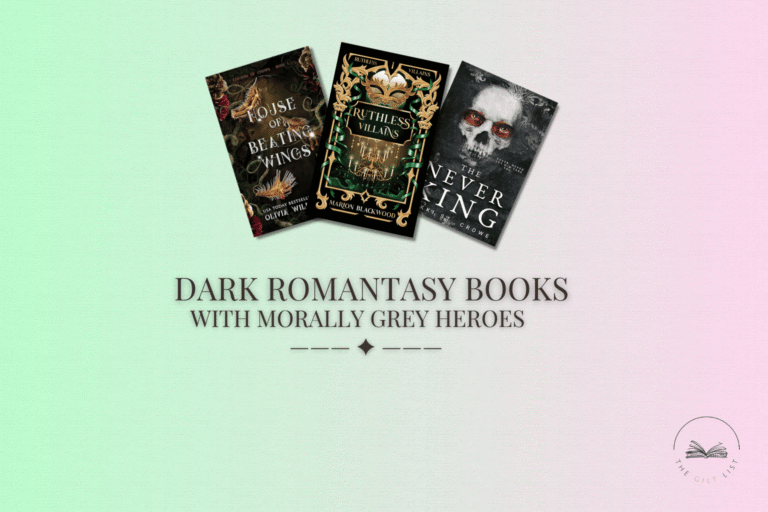

The romantasy market has a morally grey hero problem. Half the books published in the last five years have slapped “morally grey” on the marketing copy, and a meaningful number of those heroes are just rude at breakfast and don’t even have the audacity to pin the main female character to it.
This list is for the real version. The ones where the moral complication is structural — built into the plot, the power dynamic, the history — not just stapled on. If you’ve been burned by a supposed dark fantasy romance that turned out to be a grumpy-sunshine with extra swords, you’re in the right place.
Takeaways
This covers six books across three tiers of darkness. All of them have love interests with genuine moral weight. None of them have heroes who jaywalked once and call it trauma.
- Pick The Cruel Prince if you want fae court politics done properly, with a heroine who is just as much the problem as he is
- Pick House of Beating Wings if you want a hero so genuinely unpredictable you cannot safely guess his next move — and you can tolerate a heroine who will frustrate you
- Pick The Book of Azrael if you want the morally grey angle to come from guilt and broken history rather than cruelty, and you want both leads to be the complicated one
- Pick From Blood and Ash if you want a high-spice slow burn with a hero who is operating under false pretences from page one and the book is honest about what that costs
- Pick Ruthless Villains if you want both of them to be a little nuts
- Pick The Never King if you want the darkest possible end of this genre, explicit content included, with a Peter Pan who is genuinely threatening — and not in a fun-to-dismiss way
The full romantasy starter guide is there if you need to get your bearings before diving into the dark end of the pool.
Join The List
Sign up and get all the latest book news, reviews, offers, & viral recs. Unsubscribe at any time.
By subscribing you agree to receive emails from The Gilt List. You can unsubscribe at any time.
At a Glance
| Book | Author | Feel | Spice | Why It Belongs |
| The Cruel Prince | Holly Black | Sharp, political, addictive | 🌶️ Low–medium | Cardan is genuinely cruel before he’s anything else |
| House of Beating Wings | Olivia Wildenstein | Dark, epic, slow payoff | 🌶️🌶️ Medium | The hero’s moral status stays unresolved throughout |
| The Book of Azrael | Amber V. Nicole | Emotional, action-heavy, devastating | 🌶️🌶️ Medium | Both leads are grey and the book is honest about it |
| From Blood and Ash | J.L. Armentrout | High-stakes forbidden romance | 🌶️🌶️🌶️ High | Hawke has an agenda and it causes real harm |
| Ruthless Villains | Marion Blackwood | Tension-first, villain-forward | 🌶️🌶️🌶️ High | No redemption arc. That is the premise. |
| The Never King | Nikki St. Crowe | Dark, fast, unambiguously adult | 🌶️🌶️🌶️🌶️ Explicit | Peter Pan is not your friend and the book doesn’t pretend otherwise |
What Actually Counts as a Morally Grey Hero in Romantasy?
Morally grey is one of those genre terms that has been stretched so thin it barely means anything anymore. On BookTok it’s applied to any man with dark hair who occasionally looks conflicted. That’s not it.
For this list, morally grey means:
- He has done actual harm — not just been emotionally unavailable during a difficult chapter
- He operates by his own code, which may directly conflict with what a reasonable person would call right
- His choices make internal sense even when they’re not defensible by anyone else’s measure
- The book doesn’t dissolve his complexity with a convenient backstory that excuses everything retroactively
- He creates real moral tension in the reader, not just the visual aesthetic of danger
The men on this list have histories. Some of them have done things that are genuinely hard to forgive. The books don’t always ask you to forgive them. That’s the difference between this list and the standard dark love interest whose entire moral greyness amounts to “he’s possessive and tells her what to do.” That man is not morally grey. He’s just a bit much.
How Dark Do These Books Actually Get?
The spice and darkness range on this list is wider than most. Here’s where things sit:
- 🌶️ Low–medium: Tension-driven, minimal explicit content, romance runs on implication and conflict (The Cruel Prince)
- 🌶️🌶️ Medium: Some explicit scenes, not the primary engine of the reading experience (The Book of Azrael, House of Beating Wings)
- 🌶️🌶️🌶️ High: Explicit content is a meaningful part of the experience and arrives properly (From Blood and Ash, Ruthless Villains)
- 🌶️🌶️🌶️🌶️ Very explicit: This is the point of the whole book. (The Never King)
Darkness-wise, this list ranges from politically dark fae fantasy with a morally complicated romance to Peter Pan will do things and the book is not going to apologise. Content warnings are flagged where relevant throughout but always check the author’s own website for the full list before you start. Some of these go to genuinely dark places.
Fae Courts, Power Games, and Heroes Who Are Definitely the Problem
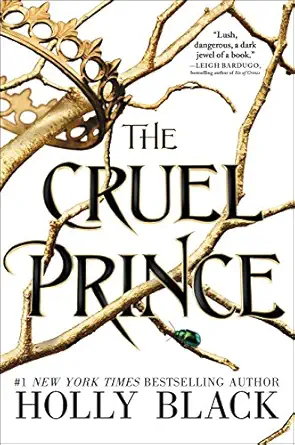
The Cruel Prince
(Folk of the Air, #1)
by Holly Black
Feel / reader experience
Political and propulsive, with a slow-burn tension that feels like pressure building the entire time. Readers describe sitting with this book the way you’d sit with someone you know is about to do something very stupid. You’re tense, unable to look away, and seriously hoping you’re wrong about what’s coming.
Spice level
🌶️ Low–medium. The tension between Cardan and Jude is the entire engine and it runs almost entirely on conflict and implication. Explicit content is minimal in book one. That restraint is doing real work and if you go in expecting otherwise, you’ll misread the whole thing.
Tropes
Enemies-to-lovers, fae court politics, morally grey on both sides, power reversal, deception
Tone
Dark fantasy with sharp political edges. Nobody here is clean and the book doesn’t pretend otherwise. Dark but not grimdark by any stretch of the imagination, it’s willing to be a little graphic, a little on that edge — there’s humour in it, mostly at everyone’s expense.
Why it made the list
Cardan is the original template for a lot of what the genre has been attempting since 2018. He orchestrates genuine cruelty toward Jude in the early chapters — not symbolic cruelty, actual social and physical harm in a bully like fashion — and Holly Black shows no interest in cleaning that up with a quick reveal that he was secretly fine all along. The complexity is earned across the series rather than handed over in a tidy redemption beat. The other reason this belongs here is Jude. She lies, manipulates, and makes choices that are hard to excuse. Two people with equally sharp edges choosing each other is far more interesting than the standard format and Black builds the tension through what characters don’t say, so the dynamic exists before anyone names it. The restraint is the fun part, as is how badass Jude is.
Read this if
- You want court politics to carry as much weight as the romance
- You like heroines who are just as much the problem as the hero
- You’ve been burned by fae romance with no actual plot beneath the attraction
Skip this if
- You need explicit spice as a core part of what makes a book work for you
- Morally grey heroines frustrate you as much as morally grey heroes do
- Low patience for a setup-heavy first act is a genuine dealbreaker
What readers are saying
- The moral consistency across both leads is what readers keep coming back to nobody in this book is clean, and that integrity is what makes it hold together as a whole
- Cardan’s POV being deliberately withheld in book one divides readers sharply; some find it frustrating, others argue the ambiguity works so we live in Jude’s POV and genuinely feel the hate
- The most common pacing note is that book front-loads the setup and the final hundred pages are where it properly does the thing; readers who pushed through describe it as absolutely worth it
- Jude is either the best heroine in the genre or genuinely maddening depending entirely on your tolerance for impulsive choices. Her fans say the impulsiveness is the point; her critics say it does not get more bearable. I still remember the one scene where she saves someone because she can’t stand to see injustice, and that scene really formed my Jude confliction
- Book two is consistently called the best installment, and knowing that changes how readers sit with the slower middle of book one
- The worldbuilding draws consistent praise across positive and critical reviews alike. Faerie feels specifically imagined rather than a generic fae coat of paint over a different story
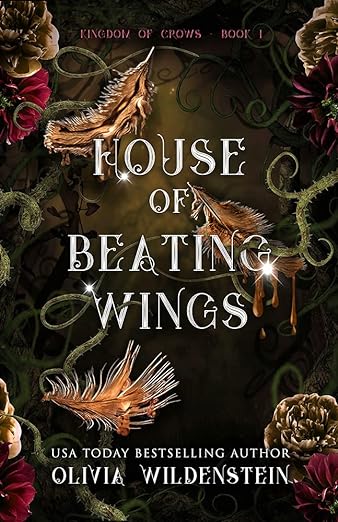
House of Beating Wings
(Kingdom of Crows, #1)
by Olivia Wildenstein
Feel / reader experience
Epic in scale and slow to reveal itself. This is a long book with a large fantasy world that earns its page count but asks for patience in return. Readers who love it describe a tension that builds quietly and pays off across the series rather than within book one alone.
Spice level
🌶️🌶️ Medium. Present and earned when it arrives. The romance is a slow build and the explicit content follows that same pace.
Tropes
Hidden identity, crow shifter mythology, enemies-to-lovers, love triangle, sustained deception
Tone
Dark fantasy with genuine political stakes. Heavy in places, ambitious in scope, committed to its own mythology in a way that rewards readers who lean into it.
Why it made the list
Most supposedly unpredictable love interests in this genre follow a pattern readers can clock by chapter three. This morally grey man doesn’t. His moral status stays in question across book one and Wildenstein shows no interest in reassuring you about him. For readers looking for fantasy books with morally grey love interests where the ambiguity is structural rather than decorative, this is one of the stronger constructions in recent romantasy. One honest note that would be a disservice to leave out: Fallon, the heroine, is a genuine sticking point. A lot of reader frustration with this book lands squarely on her as she can read as judgemental in ways that sit awkwardly against her own choices. If that’s a hard stop, know it before you start. If you can read a genuinely flawed heroine as a character study, the broader story rewards it.
Read this if
- You want a hero whose moral status you genuinely cannot resolve as you read
- Big worldbuilding that’s clearly going somewhere across a series is your preference
- You’re prepared to invest across multiple books rather than need everything from the first one
Skip this if
- A contradictory heroine is a DNF trigger for you
- You want the romance to be the clearest, most consistent thread in the book
- A single instalment that resolves satisfyingly on its own is what you’re after
What readers are saying
- The Crow King and the worldbuilding are what readers name when explaining why they continued the series
- His unpredictability is described as genuine rather than performed; readers note that they couldn’t safely predict his choices, which created a specific reading anxiety they found addictive
- Fallon’s characterisation generates some negativity the gap between how she presents herself and how she actually behaves is flagged repeatedly across both positive and critical reviews
- Pacing is largely praised for a book this long — it moves, and readers rarely describe feeling bored despite the page count
- The love triangle frustrates readers who feel it undercuts the central romance’s momentum; defenders argue the ambiguity reflects the story’s actual stakes
- Book two is described as the payoff instalment, which reframes how readers approach the slower stretches of book one in retrospect
Gods, Guilt, and the Men Who Cannot Undo What They’ve Done 🌶️🌶️
Both of these books pair their morally grey hero with a heroine who is also navigating complicated ethics. Neither is a good girl softening a bad man. Both leads are the complicated one. That’s the whole reason they’re in a section together.
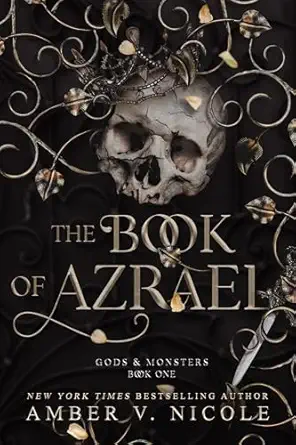
The Book of Azrael
(Gods & Monsters, #1)
by Amber V. Nicole
Feel / reader experience
Action-heavy setup that transitions into something emotionally devastating around the halfway mark. Readers describe the back half as the kind of reading experience where you lose track of time entirely. The banter is genuinely funny, which makes the devastating parts land considerably harder.
Spice level
🌶️🌶️ Medium in book one — the slow burn is real and it earns what it builds toward. The series escalates from here.
Tropes
True enemies-to-lovers (she tries to kill him, repeatedly), dual POV, divine beings with very bad histories, slow burn with genuine emotional payoff
Tone
Dark fantasy with horror elements in the worldbuilding, emotionally heavy in the back half. Not grimdark, but it does damage.
Why it made the list
Liam is morally grey in a way that isn’t about swagger or vague “darkness”. He’s done catastrophic things and lives with the fallout, and the book is more interested in how that guilt sits in his chest than in how intimidating he looks in a doorway. Dianna has spent centuries doing awful things to keep her sister safe. Two genuinely compromised people choosing each other with full knowledge of what they’ve done is far more interesting than a neat redemption arc, and this is one of the better recent examples of that. If you want fantasy books with morally grey characters where the complexity is grounded and interesting, pick this.
Read this if
- You want enemies-to-lovers where she actually does try to kill him
- You want trauma and guilt to matter more than…he’s mean but secretly he’s so soft
- You’re happy to commit to a series and let the romance breathe across multiple books
Skip this if
- You need the first 30% of a book to fly…the opening is slower and a bit debut-clunky
- You want explicit spice on a tight schedule, not a slow burn that really takes its time
- You prefer cosy fantasy romance over dark, god-level stakes
What readers are saying
- Liam’s arc is the single most praised element, which is hard to do well in these kinds of books. Readers call him one of the most emotionally layered heroes they’ve seen in a while, rather than another generic dark alpha
- The banter is consistently cited as a highlight; it feels like two people genuinely annoying each other rather than two archetypes trading quips
- Many reviews mention a slow, slightly confusing first third, but also say that once it clicks, it really clicks and the back half is unputdownable
- The cliffhanger ending is a flashpoint. Some readers loved how brutal it was and immediately grabbed book two, others needed a breather before they forgave it
- Several readers praise the casual queerness and broader diversity of the cast; it feels baked into the world rather than bolted on
- Common DNF triggers: information-dense early chapters, confusion about the world until the story settles, and a tolerance threshold for banter during high-stakes moments
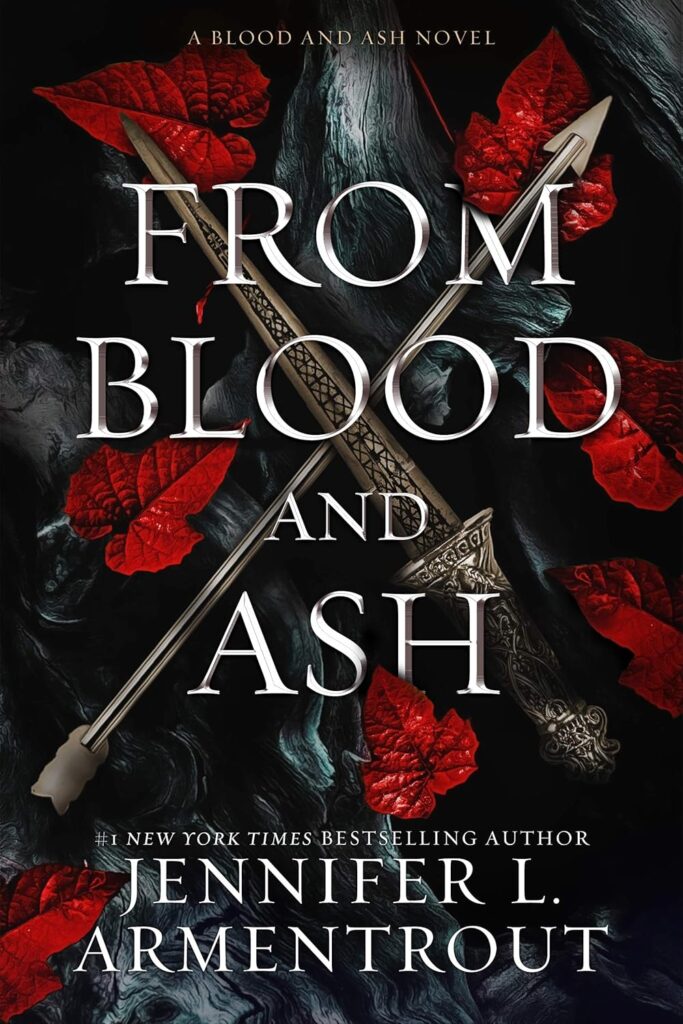
From Blood and Ash
(Blood & Ash, #1)
by Jennifer L. Armentrout
Feel / reader experience
I know I know this book is everywhere buttt if you’re not in the know….This one starts like a fairly standard high fantasy romance and then tilts the table once the masks come off. Readers who love it talk about hitting the midpoint and suddenly realising they’re far more invested than they meant to be. Readers who don’t, usually bounce in the first 200 pages. Both responses are fair.
Spice level
🌶️🌶️🌶️ High. Once Hawke and Poppy are properly in each other’s orbit, the spice arrives and it’s a meaningful part of the experience. Not slow-and-subtle — you’ll get what you’ve been promised.
Tropes
Guard/ward, forbidden romance, hidden identity, chosen one, slow burn that erupts, violent reveal
Tone
High fantasy romance with sharp swings between soft intimacy and brutal plot turns. It doesn’t stay gentle for long. The tone gets darker as the series goes on and as the mythology widens.
Why it made the list
Hawke / Casteel is the poster boy for a very specific kind of morally grey romance hero: the man who walks into the story with an agenda the heroine doesn’t know about, lies about who he is, and still ends up being the person she chooses when she knows the whole truth. He causes real harm. The book doesn’t pretend otherwise. For a lot of readers, that’s the appeal….the way the story wrestles with the cost of those lies rather than pretending the deception didn’t matter. It’s also, bluntly, one of the books that shifted romantasy into the current mainstream, so if you want to understand how we got from ACOTAR to the current wave of dark romance books with cruel heroes, this is part of the route.
Read this if
- You want a big, bingeable series with high spice and high drama
- You like hidden identity and don’t mind shouting “I knew it” at your Kindle
- You want to understand the current romantasy landscape, not just skip to the newer releases
Skip this if
- You have limited patience for naive heroines in the first act. Poppy starts sheltered and reads that way
- Slow, slightly repetitive early chapters are a DNF trigger for you
- You need to fully like and trust a hero to enjoy him — Hawke is not that man
What readers are saying
- A lot of readers mention a distinct gear shift once Hawke and Poppy actually start interacting; the banter arrives and the book suddenly feels faster and more alive
- One of the most common critiques is that the early worldbuilding feels muddy and Poppy’s restrictions don’t always line up with what she’s allowed to do on page
- The big reveal in the final quarter splits people. Some felt blindsided (in a good way), others say they spotted it coming a mile off and were impatient waiting for Poppy to catch up
- Fans praise Hawke’s mixture of tenderness and ruthlessness; detractors point to the deception and power imbalance as a line they can’t step over
- Poppy’s internal monologue is a frequent point of frustration; readers who dislike the book often cite her thought processes and repetition as the main reason
- The readers who go on to book two almost universally say that’s where the series really snaps into focus — book one feels like the necessary runway
When You Want the Morally Grey Dial Turned Right Up
These last two are for when you want the darkness itself to be the biggest thing in the room.
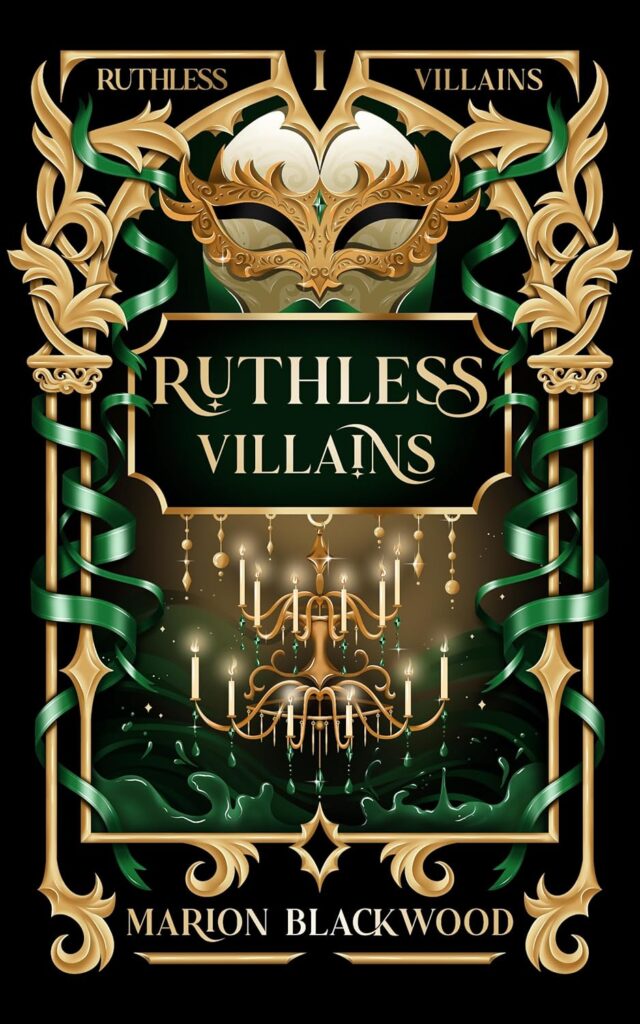
Ruthless Villains
(Ruthless Villains, #1)
by Marion Blackwood
Feel / reader experience
Chaotic, tense, and a bit like watching two scorpions trapped in a jar. Readers talk about waiting for somebody to finally go too far and knowing that, honestly, either of them could.
Spice level
🌶️🌶️🌶️ High. The sexual tension is thick from the start and the book doesn’t make you wait an entire series to see it pay off.
Tropes
Enemies-to-lovers, villain x villain, forced proximity, attempted murder between love interests, dark magic, power imbalance on both sides
Tone
Dark fantasy with a sense of humour that’s as mean as its leads. There is no soft centre waiting to be revealed — at best, you get flashes of humanity between two objectively awful people.
Why it made the list
A lot of romance books with morally grey characters quietly soften the hero as you go to help you love them more….they give him a sad childhood, a noble reason, a moment where you realise he was never that bad. Ruthless Villains doesn’t. Audrey and Callan are both dark mages. Both know they are objectively terrible. Both keep trying to kill, manipulate, and outsmart each other even as their attraction gets in the way.
Read this if
- You want villain x villain in a literal sense
- You’re happy for the relationship to run on tension and bad decisions more than tender moments
- You’re bored of every morally grey man getting handed a soft redemption halfway through book one
Skip this if
- You need deep character growth
- You want a substantial, independent plot alongside the relationship
- You prefer at least one morally solid anchor in a romance
What readers are saying
- Readers who click with it love how honest the book is about both leads being awful; there’s no attempt to sell either as secretly noble
- The constant lack of trust between Audrey and Callan is frequently described as the main hook. It makes every scene feel like it could go sideways suddenly
- Some reviews say their mutual hatred ends up being their only real personality trait; readers who wanted more interiority sometimes feel shortchanged
- The spice is divisive….there’s a lot of it, but a subset of readers say it doesn’t always match the emotional intensity they were expecting
- A few readers note the plot as convenient in places, like problems resolving a bit too cleanly for a world that’s meant to be ruthless
- The heart scene is mentioned repeatedly as the moment that sold people on the series…if you know, you know
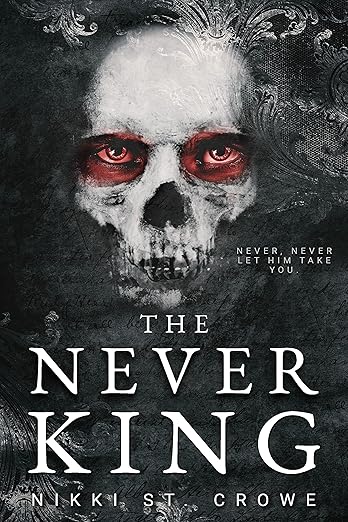
The Never King
(Vicious Lost Boys, #1)
by Nikki St. Crowe
Feel / reader experience
Fast, filthy, and unapologetically dark. This is not a slow, careful build. It’s more like being dropped into the middle of a very specific fever dream and told to keep up.
Spice level
🌶️🌶️🌶️🌶️ Very explicit. That is the entire point. The plot is there, but the book knows why most readers picked it up.
Tropes
Dark Peter Pan retelling, reverse harem, why-choose, kidnapping, morally grey (and sometimes outright villainous) love interests, obsession, magically bound heroine
Tone
Unambiguously adult and dark. Not cute, not cosy, not secretly wholesome. It leans fully into the fantasy of dangerous men in a dangerous place and doesn’t tidy it up afterwards.
Why it made the list
If you want to know how far the market has taken the idea of dark romantasy with cruel heroes, this is the benchmark. Peter, Hook, Vane, and Jasper are not morally ambiguous in the soft sense. No, they do bad things, very bad things, and the story doesn’t bend itself in knots trying to convince you they’re secretly fine. The Never King is very clear about being a dark, sexually charged retelling and commits from page one. It’s also short, pacey, and functions as a shot of something strong between longer, denser series.
Read this if
- You like why-choose dynamics and want the men to actually feel dangerous
- You’re in the mood for something explicit and quick, not a 600-page political epic
- You’re already comfortable with dark romance conventions and know your own limits
Skip this if
- You’re new to dark romance and still figuring out where your lines are
- You want deep worldbuilding and a slow, emotional burn over multiple books
- You need a neat moral resolution at the end of your fantasy romance
What readers are saying
- The reimagining of Peter as genuinely threatening — volatile, hot-and-cold, slightly nuts — is one of the most praised aspects in positive reviews
- Vane is often singled out as a standout; readers describe him as the one who felt properly monstrous in a way that still worked romantically for them
- The writing itself is described as clunky in places even by fans, but they’re also open about not really caring
- Critical reviews often point to underdeveloped emotional connection and a heavy tilt toward spice over story
- Pacing gets consistent praise. It’s a fast, one-sitting read for a lot of people, and functions well as a palate cleanser between longer series
- The cliffhanger ending is mentioned often, but because the series is now complete, most readers consider it an invitation to binge rather than a problem
Got it — here’s a “how to pick” debrief section first, then the expanded FAQ underneath. You can paste this straight after the book blocks, before your existing FAQ (or replace that FAQ with this fuller one).
Join The List
Sign up and get all the latest book news, reviews, offers, & viral recs. Unsubscribe at any time.
By subscribing you agree to receive emails from The Gilt List. You can unsubscribe at any time.
How to Choose Your Next Morally Grey Hero
If you’re scrolling through all of this thinking “okay but which of these romance books with morally grey characters is actually mine?”, here’s the short version based on what most readers are really asking.
Standalone Feel vs Big Series Commitment
All six are technically series starters, but they don’t all feel the same to read.
- Low-commitment “test the water” picks
- The Cruel Prince – shorter, sharply written, and you’ll know by the halfway mark if you’re in. It feels like a complete emotional arc even though the story continues.
- The Never King – very short, very fast. If you bounce off this, you probably don’t want the extreme end of morally grey fantasy books with cruel, feral heroes.
- High-commitment, bingeable series picks
- From Blood and Ash – chunky and sprawling, very much built as a multi-book journey.
- The Book of Azrael – long-term arc with gods, trauma, and payoffs spread over several instalments.
- House of Beating Wings – proper epic fantasy pacing; you’re signing up for a big ride.
If you’re series-shy, start with Cardan or the Lost Boys and see how much chaos you actually want in your life.
How Dark Do You Actually Want Your Morally Grey Fantasy Books?
Scale of lightly sharp to I might need to actually touch grass:
- Sharp but readable for most
- The Cruel Prince – political cruelty, emotional tension, low spice.
- The Book of Azrael – emotionally heavy, but more about guilt and trauma than graphic brutality.
- Middle of the road dark romantasy
- From Blood and Ash – violence, betrayal, and a hero whose lies actually cost something.
- House of Beating Wings – ominous world, ambiguous hero, darker stakes but not constant horror.
- Dark romance books with cruel heroes, no soft edges
- Ruthless Villains – villain x villain, both awful, no moral anchor.
- The Never King – explicit, intense, and unapologetically built around dangerous men doing dangerous things.
If you usually live in cosy romantasy and are dipping your toe in, don’t start with Nikki St. Crowe. If you’ve been bored stiff by “morally grey” heroes who are just mildly grumpy…start with Nikki St. Crowe.
Do You Want Feelings or Chaos From Your Morally Grey Romance Books?
- Emotion-first (fantasy books with morally grey love interests who feel a lot):
- The Book of Azrael – grief, guilt, found family, and a hero whose internal mess is the main event.
- From Blood and Ash – big feelings, big betrayals, lots of “can I forgive him?” energy.
- Chaos-first (dark romantasy books with cruel heroes who are the problem):
- Ruthless Villains – two disasters trying to kill and kiss each other in equal measure.
- The Never King – feral Peter Pan, why-choose, explicit from early on.
- Middle ground:
- The Cruel Prince – political scheming and emotional tension; not soft, but not full chaos.
- House of Beating Wings – slow-burn feelings wrapped in big, messy fantasy politics.
Join The List
Sign up and get all the latest book news, reviews, offers, & viral recs. Unsubscribe at any time.
By subscribing you agree to receive emails from The Gilt List. You can unsubscribe at any time.
Frequently Asked Questions About Dark Romantasy Books With Morally Grey Heroes
No. In some of these, the hero moves from “genuinely awful” to “slightly less awful and more self-aware” and that’s as far as it goes. Ruthless Villains barely bothers with redemption at all. The Cruel Prince keeps Cardan morally complicated all the way through, even as you come to understand him. If you want full, neat redemption, From Blood and Ash is the closest to that vibe on this list.
Start with The Cruel Prince if you want to test your tolerance for morally grey without diving straight into explicit dark romance. The politics and character work carry you even if the romance takes a while. If you already read mainstream romantasy and just haven’t gone darker yet, From Blood and Ash is the next logical step. Leave The Never King and Ruthless Villains for when you’re sure you actually like this end of the spectrum.
No. All six are series starters, and only The Cruel Prince functions even half-way as a self-contained emotional arc. The rest are unapologetically designed to pull you straight into book two. If you want truly standalone romantasy with spice, there’s a separate list for that: Standalone Romantasy Books With Spice.
It depends entirely on your own lines. For most readers, the line tends to be: once the book stops taking consent and consequences seriously, it moves from morally grey into “nope”. The books here vary, but all of them are at least aware that their heroes have done damage, even when they don’t fix it. If you’re not sure, check content warnings, read a few spoilery reviews, and start with the tamer end of the list.
If you liked the fae and politics side of things, head to Fantasy Romance Books Like ACOTAR. If it’s the morally questionable men specifically doing it for you, Best Shadow Daddy Romantasy Books will give you enough material to last several sleepless weeks.
Most of this list lives in the overlap between morally grey romance books and morally grey fantasy books…the heroes are complicated, the worlds are sharp, and the darkness is part of the story and not just found in smut scenes. The only one that really tips into full dark romance books with cruel heroes is The Never King, with Ruthless Villains close behind it; both are built to lean into danger and obsession as the main draw.
If you want a gentler entry point into morally grey fantasy books:
– Start with: The Cruel Prince – low spice, political scheming, emotional tension, and nothing too graphic.
– Or with: The Book of Azrael – dark and emotional, but more focused on internal conflict and trauma than on cruelty for shock value.
Leave The Never King and Ruthless Villains for when you’re sure you actually enjoy reading about heroes who are objectively terrible people.
If you want the romance to feel genuinely romantic:
– Most romantic: From Blood and Ash and The Book of Azrael — they care deeply about feelings, forgiveness, and long arcs between two people, even when the heroes are lying or haunted.
If you want the unhinged end of morally grey:
– Most unhinged: Ruthless Villains and The Never King — the relationships are built on knives, obsession, bad decisions, and a general absence of common sense.
Yes, but the fit varies:
– If you like mafia / billionaire dark romance books with cruel heroes, you’ll likely click fastest with Ruthless Villains (two villains) and The Never King (why-choose, extremely dangerous men).
– If you’re more used to contemporary settings but want to try fantasy, From Blood and Ash is a good halfway point: big feelings, clear tropes, and familiar emotional beats dressed in fantasy clothes.
Use this order:
The Cruel Prince – see if you like court scheming and morally messy fae.
The Book of Azrael – see if you like gods + guilt + slow burn.
From Blood and Ash – add more spice and betrayal.
House of Beating Wings – commit to heavier worldbuilding and an ambiguous hero.
Ruthless Villains / The Never King – only when you’re comfortable with actual dark romance territory.
If you fell for the fae and political games, go to Fantasy Romance Books Like ACOTAR. If it’s specifically the morally dodgy men doing it for you, Best Shadow Daddy Romantasy Booksis your next rabbit hole. Both will give you more fantasy books with morally grey characters than your sleep schedule strictly needs.