
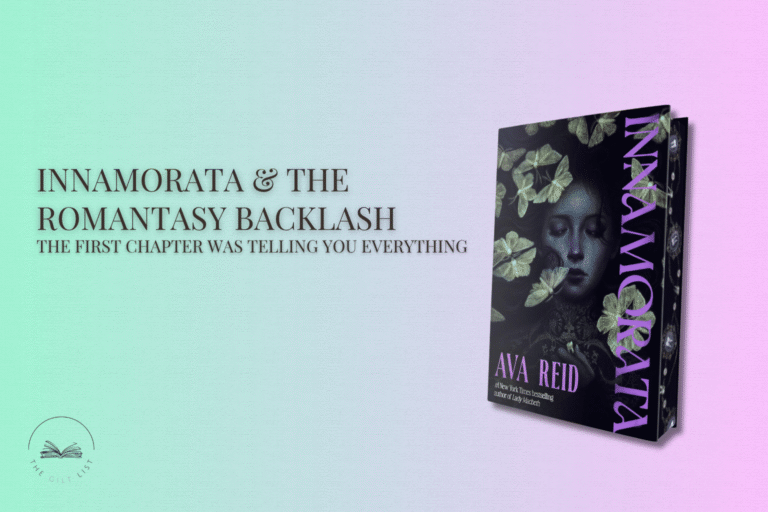

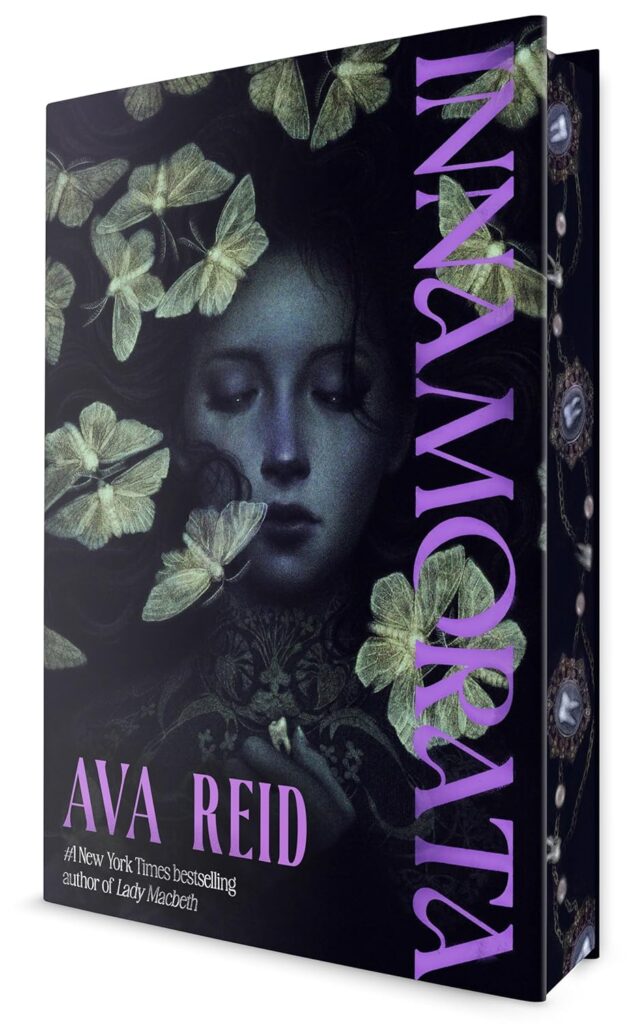
The discourse around Ava Reid’s Innamorata has been going on since mid-March 2026, when the book graced the shelves, and many readers decided instantly that they had been duped. The word betrayed was thrown around quite a few times, along with misleading marketing.
Reid had said, publicly, repeatedly, before publication, that Innamorata is not a romantasy. She described it as gothic fantasy, or meta fiction, a book with dark content warnings based in part on her personal writing heroes. But Reid herself started out as a romantasy author, leaving her in that grey zone where an author needs a lot of chatter about genre swapping before the book comes to market. (Think Fourth Wing, or Ali Hazelwood, who both had a good marketing ramp out of romance.) That’s a conversation worth having in the literary world…
But here’s another. Does the first chapter of Innamorata itself make its genre clear from the jump? Should we all have been warned the moment we opened the page, regardless of expectations?
Innamorata at a Glance
| Author | Ava Reid |
|---|---|
| Published | March 17, 2026 |
| Genre | Gothic fantasy / literary dark fantasy |
| Series | The House of Teeth Duology, Book 1 |
| Not | Romantasy |
| Spice | None |
| Content warnings | Body horror, ritual dismemberment, death, dark themes |
| Read if you like | Gormenghast, literary gothic fiction, dark fantasy with a mordant sense of humour |
| Skip if you want | Romance, warmth, a protagonist who pushes back against her world |
Quick Gossip
- Innamorata published March 2026 and immediately generated discourse
- Romantasy readers felt misled, the blurb reads like a forbidden love story, the book is gothic body horror
- Reid said publicly and repeatedly before publication that this is not a romantasy
- The blurb, likely written or tweaked by the marketing team, includes “She must not fall in love” one of the most romantasy-coded lines in existence
- The first chapter opens on a ritual corpse dismemberment, a leech named Wrestbone, and teeth extracted into a velvet pouch
- The disconnect is a marketing problem, a BookTok aesthetics problem, and a genuinely interesting craft question about what genre promises look like on the page
Why The Blurb Sold a Lie
Listen, blurbs on occasion have nothing to do with authors. Sometimes an author will send what they think should be the blurb, and the marketing team will tweak it and do their thing. Sometimes the editor will give it a stab on behalf of the author. But in general, blurbs are marketing pieces more than prose. So in this case, Reid can’t really be blamed.
With that aside, there is a line quite incriminating within the blurb, and it goes: Revenge burns in Agnes’s heart, but so do stranger passions—and it is Liuprand, the golden prince, who speaks to her soul. This passion is as treasonous as it is powerful, poisoning the kingdom’s roots and threatening to tear the already shattered realm in two.
For Agnes’s final order is the gravest: She must not fall in love.
If that doesn’t smack of romantasy, then what does? Unfortunately, the call is coming from inside the house, and it’s screaming I’m a romance, please pick me. So, can we really blame readers for being a little bummed when they bought the book and it didn’t live up to its promise?
If you’re looking for some freebie KU reads that are romantasy, or just a list to trust, check out this research blog on The Best Kindle Unlimed Romantasy Reads or the Romantasy Hub.
What The Prologue Is Actually Doing
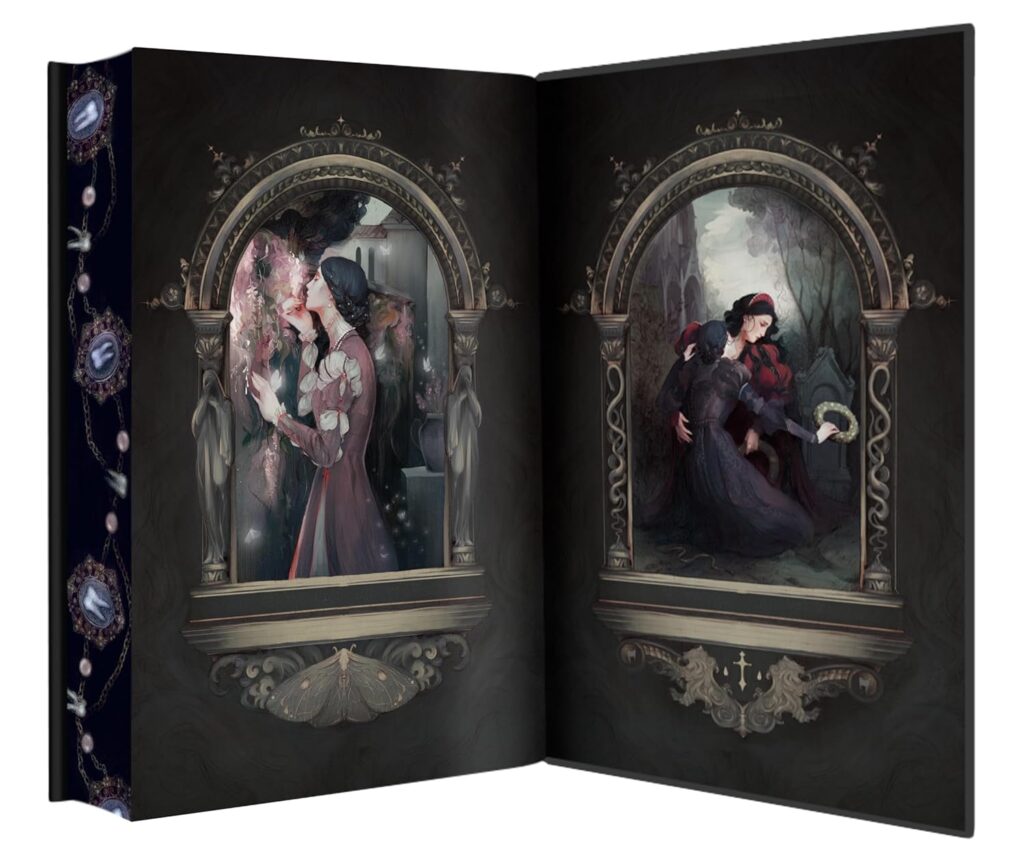
The book opens on a single paragraph that covers the castle’s entire ownership and the world behind it. It goes on to describe how grim it was before said ownership, and ends on a line meant to drum in the cruelty of the world.
“It was the castle of Nicephorus the Sluggard, and before that it had been the castle of Widsith the Precious […] and the great monument flowered up, stone upon cruel stone.“
This is doing a lot for worldbuilding and tone alike, but could still be mistaken for a whimsical romantasy if read with the right inflexion. The quirky names and the word flowered are doing some lifting in the wrong direction.
Either way, it’s well done. It gives history without boring you, sets up the political intrigue by explaining why they would hold on to these nobles and do anything to protect the status quo. It gives the land itself a voice, one of cruelty and coldness. It’s a brilliant opening.
But the voice still doesn’t give us enough clues.
For example, compare that opening to Rachel Gillig’s very own gothic romantasy One Dark Window, and you could be forgiven for being on the fence: The infection comes as a fever in the night. If you take ill, watch the veins — the tributary of blood traveling down the arms. If they remain as they ever did, you have nothing to fear. If the blood darkens to an inky black, the infection has taken hold.
Chapter one, though, holds the real clues.
Chapter One: THE BODY OF ADELE-BLANCHE
That’s a striking name for a chapter title. A body is possessed, no longer a person. The opening sentence even reads:
“No corpse could be left to lie long enough for maggots, but there were leeches.”
There is no way to read that sentence as a romantasy opening. There’s a corpse. There are leeches. There’s a corpse. It’s something so genuinely awful and yet somehow humorous in the way a dark gothic comedy should be.
Many an author before Reid has used death and absurdity in scenes to help set up a grim world feel. Step outside of the world of romantasy/magic for a minute, and you can see this sort of body/world humor repeatedly in Fight Club, for example.
So how do romantasys open & why is Innamorata different?
Openings in romantasy start with goals and emotion.
A good way to think about this is Fourth Wing. This opens with Violet’s fear and a little bit of determination. We know her goal and all the emotions and thoughts behind it immediately. We learn about the character, not the world.
What follows in this first chapter of Innamorata instead is a ritual dismemberment performed in the mud, in the rain, at a funeral, on the body of Agnes’s grandmother. Specifically:
Blood is drained via a pig viscera tube inserted into the dead woman’s throat. Thirty-two teeth are extracted one by one, each with a brisk dexterous tug, and deposited into a velvet pouch.
This is body horror, a little bit of a jump scare, and something I think we’re going to see more of.
I predicted a couple of months ago that we would start to see more gothic, gruesome reads, and it looks like this might be that coming to fruition. Reid is especially skilled at this sort of writing; every sentence makes you squirm. It’s not personally to my taste, but this is a sect of writing that many people go out of their way to devour.
The Humour Is Also Not Romantasy Humour
This is worth talking about, because some of the confusion could spring from here. Innamorata has a sense of humour. As do romantasys. But Reid’s humor isn’t punchy enough for a romantasy, it’s dry and a little sarcastic, but not biting and at someone’s expense. A good example of Gothic humor is:
“His baldness shone like the back of the silver spoon his leeches used to scoop out Adele-Blanche’s eyes.”
The comedy in Innamorata‘s first chapter is building dread in the reader. The humor in most romantasy is designed to make you squee or agree with the main character.
Agnes Is Not a Romantasy Protagonist
This matters structurally because the protagonist you meet in chapter one is the genre contract made flesh. And Agnes isn’t against the world the way most romantasy protagonists are.
There’s always a sense in the first chapter of a romantasy that if the MC really wanted to, they could burn down the world; they just need time. The characters in Innamorata are political animals in a brutal world. A reader fluent in gothic fiction would clock this immediately and settle in. A reader who came in expecting romantasy may have been reading so hard for what they wanted to find that they missed it.
Another clue is that Agnes watches her grandmother’s ritual dismemberment with too much detachment for a romantasy character. There is grief, but not an “otherness” you would expect. Violet Sorrengail is angry and afraid, Feyre is an outsider in her own family, and even Alessandra in the Shadows Between Us is both evil and ready to take justice into her own hands against norms.
So, Why Did The Ava Reid Controversy Happen?
BookTok operates as a recommendation engine that gets rid of context and rolls with aesthetic. A dark character, an author’s name associated with romantasy, the very idea of Lady Macbeth and poetic romanticist Shakespeare, and you have a bunch of readers who think they’re getting what’s on the tin. Also, that blurb is, yikes.
These readers then buy excitedly before release, settle down for an epic love story with a big cup of tea, and meet…a corpse ritual in the mud and a leech named Wrestbone extracting thirty-two teeth with pliers.
The reader was sold a certain promise, a contract, if you will, between writer and their partner in imagination. That was broken. Once trust is broken, it can be hard to reel your reader back in. Reid should not be happy with her marketing team right now, honestly, unless, of course, this was done on purpose to get coverage. For a genre switch to work, there needed to be a longer ramp and a clearer campaign.
What This Means If You’re a Writer
Innamorata‘s first chapter did its job, and it did it bloody well. The problem is that in 2026, a first chapter cannot always compete with the accumulated weight of external genre signals. For Ava Reid, with an established readership and a publisher with full distribution, this will blow over, and the book will find its actual audience because it’s genuinely brilliant.
For a debut writer, a mismatch in the first chapter can be the kiss of death for sales. If your first chapter is screaming gothic fantasy but your query calls it romantasy, or your cover leans romantic, or your comp titles are Fourth Wing and A Court of Thorns and Roses, you are building the same trap without Reid’s existing readership.
This is exactly what a first chapter critique is for. It won’t tell you if the writing is good, line by line. The writing in Innamorata‘s first chapter is exceptional. No, the writer needs to know point-blank that the pages are sending the right message before the reader gets too far.
A romantasy reader who made it through Adele-Blanche’s blood-draining, Wrestbone and Swallow and the velvet tooth pouch, the entrails in the mud, and the eyes in the silver spoon — and still expected a different book — was never really reading the chapter. They were reading what they thought was there because of a promise made. Not only is that human, but almost every writer will do that for their own work more than once in their career.
If you want to know whether your first chapter is making its genre promise clearly — or accidentally setting up expectations it can’t keep — that’s exactly what my fantasy first chapter critique looks at.