
When SenLinYu announced that Manacled — the Dramione fanfic that emotionally destroyed a generation of readers, racked up over twenty million downloads, and is regularly described in the same breath as people’s favourite published novels — was becoming a real book, many people lost their ever-loving minds… Understandably.
I loved Manacled. Read it in chunks when I absolutely should not have been reading anything at all. Felt genuinely devastated at the end. Pressed it on at least three people who were not emotionally prepared. Read the first half more than once and revelled in every agonising second of it.
So when Alchemised hit shelves in September 2025, I was not approaching it neutrally. I had a certain set of calibrated expectations. And what I found was a book that is genuinely good in places — excellently written, unapologetically dark, thematically serious in a way the genre needs more of — and just ok in others, particularly in the places where it almost gets there and then pulls back from exactly the thing that would have made it devastating.
Here is the honest breakdown, spoiler-free, of course. For more reviews like this, check out the review hub. Or check out more standalone romantasy with spice or some shadow daddy’s worth the read.
“She was a non-active member of the Order of the Eternal Flame and did not fight.”
― SenLinYu, Alchemised
Takeaways
- Alchemised is a standalone dark fantasy by SenLinYu, reimagined from the Dramione fanfic Manacled, published September 2025 by Del Rey (US) and Penguin Michael Joseph (UK)
- It debuted at number one on the NYT Bestseller list, won the 2025 Goodreads Choice Award for Best Debut Novel, and sold 145,000 copies in its first week alone
- The three-part structure — Now, Before, Now Again — creates pacing issues that work against the romance more than they help it
- SenLinYu handles non-consent and war trauma with more thematic nuance than most dark romantasy on shelves right now — but the book occasionally flinches from the darkness that makes those themes hit
- The prose is legitimately excellent and carries a significant portion of this score
- Manacled readers should read this. Just recalibrate expectations accordingly

At a Glance
| Author | SenLinYu |
| Series | Standalone |
| Publisher | Del Rey (US) / Penguin Michael Joseph (UK) |
| Published | September 22, 2025 |
| Pages | 1,024 to 1,040 pages |
| Genre | Dark fantasy / Dark romance |
| POV | Third person limited, Helena |
Should I Read Alchemised?
Read it if:
- You read Manacled and want to see where SenLinYu goes with original IP
- You’re here for dark fantasy with genuine war trauma handled seriously
- You appreciate morally complex writing that doesn’t tidy up the difficult bits
- You want prose that actually does something atmospheric and considered
- You’re comfortable with non-consent framed within political violence rather than played for titillation
- You want a book that takes its own darkness seriously and earns the right to go there
Skip it if:
- You’re expecting the same level of emotional devastation as Manacled
- Non-linear timelines frustrate you. The structure is very deliberately fragmented
- Spice as entertainment is what you’re after…this book’s intimacy is well thought through
- You cannot stand any non-con material
- You want something light and quick to read this weekend on a whim
Feel & Tropes
| Genre | Dark fantasy / Dark romance |
| Romance | Slow burn, complicated, earned in fragments |
| Spice | Low–moderate 🌶️🌶️ |
| Tone | Gothic, gritty, war-weary, unapologetic |
| Darkness level | High |
| Ending | Bittersweet, earned |
Tropes:
- Captor / captive
- Former rivals
- Memory loss and recovery
- Forced proximity under duress
- War survivors
- State-sanctioned violence
- Reluctant protector
- Grey morality on all sides
The Tone? Dark Fantasy First. Romance a Cautious Second
Let’s set expectations clearly, because this will save some readers a lot of trouble: Alchemised is trying to be a romance with dark dressing, but I think its strengths lie elsewhere. It is dark fantasy that contains a romance, a thoughtful romance that will have you questioning if you would have felt or acted the same way by the end of the book, rather than swooning. But what it really is boils down more aptly to a take on war and the women who make a difference in the background.
This is set in post-war Paladia. It’s a world shaped by regime violence, corrupt guild families, a civil war that has left its survivors broken, and a magic system built around alchemy, necromancy, and vivimancy that is genuinely atmospheric and carefully constructed. The opening sections of the book, the Part One “Now” timeline, are where Alchemised is at its most powerful, it’s gritty, dark, painful, the kind of meandering thoughts you would expect from a terrified, traumatised character. The writer does this incredibly well. The weight of this world lands properly from the get-go. Helena’s situation — prisoner, experimented on, stripped of her memories — carries real dread with it that will have you flipping pages fast.
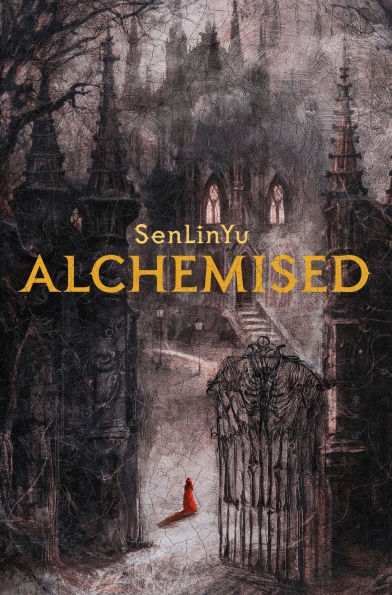
The Gothic atmosphere SenLinYu builds is mentioned in practically every review for a reason…it genuinely works. You can almost feel the shadows, smoke, and bones around you. Candlelit rooms, creepy buildings, a persistent sense of rot beneath anything beautiful. It’s the kind of dark fantasy that makes you feel the world has actual consequences, or moreover, has an actual say in how the people who walk through it act.
What Is the Structure Actually Like?
The book is divided into three parts: Now, Before, and Now Again.
In theory, this should work as you meet Helena and Kaine in the present, where Kaine does terrible things, drop back four years to understand how they got here, then return for the resolution with new information unlocked. However, in execution, the Before section doesn’t use its runway well enough to make you feel actual weight when you land back into the Now Again. This could be because you spend so much time in the Before that you feel a bit of whiplash, like you aren’t sure how Helena actually feels anymore, so it loses some stakes. As the reader, it really does feel as if 4 years have passed, everything that happened in the Now doesn’t seem to matter as much anymore, making the Now Again lose stakes, at least romantically.
This is felt most acutely if you’re coming from Manacled – where Helena has flashbacks in the Now that keep you hinged to the emotional tension and asking, “What happened before?” Rather than reading Before chronologically for over 40 chapters.
Here is the breakdown for a bird’s eye view:
- Part One: Chapters 1–21 (Present, 1788 PD).
- Part Two: Chapters 22–65 (Flashback, 1785–1787 PD).
- Part Three: Chapters 66–77+ (Present, 1789 PD).
The other issue in Alchemised specifically is that the Before section — where the majority of the relationship development has to happen — doesn’t go far enough or dark enough to make the Now, or Now Again, land with the gut-punch it’s clearly aiming for. It’s difficult for me to critique this loss of darkness from the original Manacled and put that on the author. The author is clearly capable of this sort of nuance and devastation; it may be that the publishing house simply wasn’t comfortable enough to “go there”.
Does Alchemised Work Outside Of the Harry Potter World?

What made Manacled work in that emotional shorthand was a framework already loaded and ready to fire: an inherited world (HP), and characters readers already loved being put through the worst of it.
Alchemised has to build all of that from scratch, which is the right call for an original novel, and SenLinYu does build it impressively, with some fun new ideas. But we do lose a lot in the translation. I do wonder if this would have worked better as a trilogy, allowing the reader to really explore that world and get what they had as a HP fan reading Manacled.
What Is Helena Like?
One of the book’s genuine strengths, and I want to be clear about that. Helena is not a passive protagonist dressed up as resilient; you can freaking feeeeeel the changes she goes through and how they change the decisions she makes.
She is someone whose worldview has been systematically shaped by genuinely terrible things, and that makes her hard to love cleanly, which is exactly the point. Sometimes you wish she were braver, as you imagine you would have been; sometimes you wish she was less rash. She has opinions, good and bad, she seems like a fully fleshed-out person living in this world. This is not Mary Sue territory.
Further, she does not process her trauma on cue or neatly. She has attempted to end her own life repeatedly, before she even understands the depths of her despair, and when she does understand it….well this changes her too. She is suspicious of everything, including things that might actually help her, which is realism. Her naivety throughout the story makes sense, too. This is an author who gets power struggles, trauma, and the kind of person it would take to survive.
“Someday, she promised herself, someday I am going to love him in a moment that isn’t stolen”
― SenLinYu, Alchemised
What Is Kaine Like?
The central emotional question of Alchemised — why does Helena love Kaine, and why does he love her — never fully resolves in a way that feels clean. At first, you may think he is the typical obsessed from afar, morally grey trope. But like the original character Kaine is based on, Malfoy, there is a depth there that doesn’t quite fit this trope the way say, Rhysand or Alex Warner would.
For me, the Before section, where their relationship should be built with a proper foundation, wasn’t enough intimacy or “big moments” to make their love feel inevitable. If you’re really into an end-of-the-world, devastating romance, Kaine might not be for you. Sure, he’ll burn the world down for her, but a part of me suspects he would have done it anyway for other “reasons” in the book that I won’t reveal.
Paste Magazine’s review noted that the book “counts on the fact that many readers will simply default to mapping” an existing relationship onto Helena and Kaine — and that’s a structural gap that should have been caught and addressed in the Before timeline. We could have used more pining, I think that’s ultimately what was missing here. Whining and pining out of windows.
Kaine, on his own terms, is genuinely interesting — morally complicated, carrying war damage that makes his choices legible without making them clean, neither villain nor hero in any simple reading. But whether he works for you depends enormously on whether you’re already wired for that sort of man.
“I have warned you, if something happens to you, I will personally raze the Eternal Flame. That isn’t a threat. It is a promise. Consider your survival as much as necessity to the Resistance as Holdfast’s. If you die, I will kill every single one of them.”
― SenLinYu, Alchemised
Does It Handle the Dark Themes Well?
This is where Alchemised does something genuinely interesting, and it deserves proper credit for it. A non-con story line that asks how much power a patriarchy has against itself when things get bad is interesting. It’s getting so much criticism online as it deals with something genuinely awful, but so do many other novels in this stratosphere of evil governmental takeover. I’m not sure the criticism is earned. More on this below, but it comes with spoilers.
Is It Spicy? 🌶️

Low to moderate, and deliberately so. The intimate scenes carry significant thematic weight and are not written solely for entertainment. In fairness, most spicy scenes should follow this rule. There are some where you feel the desire, passion, heat, come straight off the page. This is not, not a spicy book. However, several of them are genuinely uncomfortable and are meant to be. If you have any trauma, this might not be the spicy book for spicy sake you want it to be.
Does It Deserve the Goodreads Choice Award?
Look, Best Debut Novel at the 2025 Goodreads Choice Awards is not given out by accident. The competition existed. Readers voted. The book won on genuine merit, not just fandom loyalty. This is a debut that tries to tackle huge questions and world-building. I think if this author keeps writing, we’re going to see great things from them. After all, this is a debut.
Grimdark Magazine described the book as one that “digs its teeth in like a starving wolf” and noted that “the genius is here, unmistakable.” And I say I agree. I’m excited to see what comes next and how this author grows.
Is It Actually Good?
It is not Manacled. Nothing in traditional publishing can be Manacled, because Manacled existed in a context — the inherited emotional framework, the fandom as amplifier, the accumulated investment of readers already primed for exactly this story, a real darkness that would make a lot of publishers very uncomfortable — that cannot be recreated. Alchemised is doing something genuinely harder than its original: building an original world with the same emotional stakes entirely from scratch, and playing to market whilst doing it.
On its own, it’s worth the read, but it might not give you the same feelings you expected. Also, Helena is doing something as a character that most protagonists in this genre don’t attempt. And when the gritty present-day sections are firing — when Alchemised is fully inhabiting the dark fantasy it set out to write — this book is genuinely compelling in a way that very few debut novels manage.
For dark romantasy readers, it is still one of the most serious entries in the genre right now. For Manacled readers specifically: read it. Just know that some part of you will spend parts of it grieving the version you’d already built in your head.
What Is the “Huge Plot Hole” Readers Keep Ranting About?
If you’ve seen people on Reddit losing their minds over a “plot hole so big it breaks the book,” they’re talking about a viral two-part rant that’s now basically required reading for the Alchemised discourse.
The short version: the rant argues that Alchemised copies Manacled’s structure but forgets the logic that made those beats work, especially around the rape/breeding plotline and Kaine’s secrecy.
- By the time Morrough orders Kaine to “make Helena useful” via pregnancy, Kaine has already told her huge regime secrets (like Morrough dying) and we’ve been told there are “safe” rooms and areas where Morrough isn’t watching.
- In Manacled, Draco’s silence and cruelty are justified by omnipresent mind-reading and the Dark Mark. In Alchemised, that threat is weaker, yet the book still expects the same “he had no choice” emotional payoff.
- Kaine can remove Helena’s restraints and move her around the estate but somehow can’t warn her, tell her who he really is, or avoid the breeding order, which makes the assault feel gratuitous rather than structurally necessary.
- The rant also points out smaller logic breaks (Kaine checking every corpse and prison but not the tanks, Morrough not recognising Helena despite having met/possessed her before) and argues they stack into a pattern: the book hits Manacled’s beats without rebuilding the internal scaffolding to support them.
Whether you fully agree or not, it’s a smart, thorough breakdown of why some readers feel the book’s moral and plot logic don’t hold if you haven’t read Manacled first. If you want the full,extremely detailed version, you can read the rant here and decide for yourself. Part 1. Part 2
Spoiler Time
By the time the book opens, the war is already over and the Resistance has lost. Helena wakes in a tank with most of her memories of the final year erased, reduced on paper to a “minor healer” while the necromantic regime sorts prisoners into who is useful and who is disposable. She’s sent to Kaine Ferron’s crumbling estate so he can strip her mind for whatever the victors think she’s hiding: the truth about the Eternal Flame, Paladia’s last great gambit.
The “Now” timeline is Helena trapped in that house, with Kaine as her state-appointed captor and interrogator, prodded by Morrough, the High Necromancer, who keeps threatening to hand her over to worse men if Kaine fails to crack her. Slowly, Helena realises two things: first, she is not just a healer but an animancer, which makes her uniquely dangerous in this new order; second, she chose to have those memories removed herself as part of a Resistance plan she no longer remembers consenting to.
The “Before” section drops back into the war years and shows Helena as a young alchemist in the Order of the Eternal Flame, working under the Resistance’s golden boy, Luc Holdfast. The Order is not the pure, righteous counterforce Helena believed in; it is misogynistic, hierarchical, and willing to burn through girls like Helena if it keeps the myth of purity intact.
Kaine, meanwhile, is already a monster in the world’s eyes: Morrough’s High Reeve, a boy tortured and broken into mass-murderer shape at sixteen and then turned loose on the battlefield. Kaine acts as a deep-cover spy for the Resistance as long as he can have one thing…Helena.
Their relationship builds in that messy space where shared trauma, loneliness, and moral compromise live. They’re both, in different ways, already broken by the war before they fall in love.
In the “Now” timeline at Kaine’s estate, Morrough decides she is too valuable to kill. Instead, he institutes a breeding programme. He has Helena’s prior sterilisation reversed and orders Kaine to impregnate her so he can weaponise any child born of an animancer and his favourite war monster. There is no consent from Helena here. She is a prisoner. He is her captor. They are both under direct threat of torture and death if they refuse. What happens is rape, regardless of how much they care about each other or what the narrative later reveals about their shared past.
It is rooted in a specific, horrifying political reality — a regime that weaponises bodies as a tool of population control and power, in which what Kaine does to Helena exists in a genuinely grey moral space because the alternative is her death at the hands of that same regime. It is not framed romantically. It is not cleaned up or softened. It is presented as the complicated, devastating thing it actually is.
What Kaine does as simultaneously a form of survival and a form of harm, what the regime does in mandating it as an act of control, and how Helena has to hold all of that once her memories return — is exactly what adult dark fantasy should be willing to examine. Does it make Kaine irredeemable? Some would say yes, some no. These are questions we should ask, as they act as allegories for things we see every day play out in the patriarchal world we live in. Since discussions about bodily autonomy and state-sanctioned violence are not abstract theoretical exercises, Alchemised feels like an important read for young adults.
It’s important to note that the book is very clear that Morrough’s order is an act of state violence first and foremost. Kaine’s compliance is framed as the choice of a man who has spent his life trapped in a system designed to break him and then use him, but the narrative does not excuse him or ask Helena to treat it as anything other than a violation layered on top of love.
The pregnancy itself becomes the trigger for Helena’s memories to reform. Morrough’s attempt to turn her into breeding stock backfires: as her body changes, the alchemical transmutations she performed on her own mind start to unravel.
She remembers that she volunteered to have the Eternal Flame transmuted into her to deny it to the regime, that she and Kaine were already in love, and that they had made a plan together to win the war from the inside even if it killed them both. She also remembers, fully and clearly, that none of that makes what’s happening to her now acceptable. As the reader, we see what happened in part 2, rather than in drips of memories.
Helena regains her memories through a combination of animancy extraction, emotional triggers, and the physical changes from her pregnancy, which destabilises the alchemical barriers she placed on her own mind at the war’s end. She realises her full role in the Resistance plan: transmuting the Eternal Flame into herself to deny it to Morrough, her prior relationship with Kaine as deep-cover spies, and the fact that she chose memory erasure to protect him after their cover was nearly blown.
From there, the endgame kicks in. Helena uses her restored powers to remove the bone fragment Morrough embedded in Kaine and give him back the stolen piece of his soul, cutting Morrough off from one of his strongest power sources and finally stopping the slow drain that’s been killing Kaine. That, combined with years of Kaine quietly thinning the ranks of the Undying, leaves Morrough weakened enough that Lila Bayard can return to Paladia and finish him off for good.
Helena and Kaine survive the battle but cannot stay. Paladia’s new order views them as war criminals — Kaine for his atrocities as High Reeve, Helena for her vivimancy and role in Morrough’s downfall. They escape with their newborn daughter, Enid, fleeing to a remote island in exile. There, they live quietly, raising Enid away from politics and shadows. They reunite with Lila Bayard and her son Apollo, forming a small found family in obscurity.
Helena receives no public recognition for her pivotal role — no memorials, no honours. The world remembers Morrough’s death as a “mysterious pyromancer bomb” (Lila’s work), erasing Helena entirely. Some readers call this “devastating,” but it’s intentional: Helena always prioritised safety over glory. Kaine struggles with her forgiveness, haunted by his actions, but they stay together. The epilogue frames their life as hard-won peace — trauma carried, but family intact, far from the war that broke them.
What the book doesn’t always do is earn the full follow-through on that incredible setup. There are sections — particularly in the Before timeline — where Alchemised feels like it’s trying to protect the reader from the very thing that makes it powerful, over-explaining context that should land emotionally rather than intellectually, while simultaneously under-explaining the specific beats that would make the full weight of it register.
Manacled didn’t protect you from it. Manacled trusted you to sit in the worst of it, and that trust was a significant part of why it worked. Alchemised occasionally flinches. You feel it when it does, especially if you’ve read both and can see where this book could have pushed one shade darker or stayed in the pain one chapter longer and chosen not to.
Gilt Score: 73 / 100
1 is a low score and 15/20 is high.
| Category | Score |
| Worldbuilding | 9/15 |
| Plot & Stakes | 11/15 |
| Romance Execution | 12/20 |
| Chemistry | 11/20 |
| Character Depth | 13/15 |
| Prose & Voice | 9/10 |
| Originality | 8/10 |
Reader Fit Index
(1 low – 10 high)
| Reader Type | Score |
| Manacled readers | 8/10 |
| Dark romantasy lovers | 9/10 |
| Spice-first readers | 3/10 |
| New to dark fantasy | 4/10 |
| War and political fantasy readers | 8/10 |
| Casual romance readers | 1/10 |
| Fanfic-to-trad pipeline followers | 9/10 |
Frequently Asked Questions
Is Alchemised the same as Manacled?
Not exactly. Alchemised is a reimagining of Manacled, adapted into original IP with new character names, a new world called Paladia, and new magic systems. The emotional core, plot architecture, and many key scenes are preserved. SenLinYu has confirmed they maintained scenes they felt were integral to the original. Manacled was removed from AO3 on January 1, 2025, ahead of publication.
No, technically. Alchemised is a standalone novel. But coming in with Manacled as context meaningfully changes the experience — for better and worse. It adds emotional depth to the romance. It also means you spend parts of the book aware of where the original hit harder. Whether that’s what you want is a personal reader call.
Very dark. Content warnings include non-consensual sexual contact framed within state-sanctioned political violence, forced pregnancy, memory erasure, torture, suicide attempts, and war trauma throughout. This is not casual dark romance — the darkness is structural and thematic, not decorative.
Low to moderate. The intimate scenes carry thematic weight and are not written as entertainment. If you’re looking for spice as a feature of the reading experience, this is not the right book for that specifically.
Primarily the structure and the romance. The three-part timeline means the relationship between Helena and Kaine has to be built in a fragmented Before section that doesn’t go as dark or as deep as the equivalent emotional architecture in Manacled. Readers who came in expecting the same gut-punch tend to find the romance less earned and the reveals less devastating. The writing itself, however, is widely praised even by those who prefer the original.
Yes. Legendary Entertainment purchased the movie rights in a pre-emptive seven-figure deal — reported to exceed three million dollars — before the book was even published. The film is not yet in production.