

Look, if you’ve already Googled “books like ACOTAR” and ended up staring at a list that included Twilight, I’m sorry. That sort of thing can happen to good people. But never feat, this is the list for readers who finished A Court of Thorns and Roses…or more likely A Court of Mist and Fury…and are now standing in the ruins of their previous personality, wondering what comes next. I’ve kept it tight, honest, and left out everything that only appears on these lists because it vaguely features magic and a man with strong opinions about the female lead as best as I could.
One firm rule for this list is that everything here is actually fae, and not just like ACOTAR for other reasonings. I’ve also included some indie and under-the-radar picks alongside the ones you’ve probably already seen on your For You page, because the fae romance world is considerably bigger than the three books that always show up first.
Check out the romantasy hub for more lists just liket his one.
Takeaways
- Closest to ACOTAR’s actual fae court experience and literary quality: The Cruel Prince by Holly Black
- Fae romance with a genuinely original world and writing that earns its slow burn: When the Moon Hatched by Sarah A. Parker
- The newer fae series that hit #1 NYT and has 104k+ Goodreads reviews for a reason: Quicksilver by Callie Hart
- An indie half-fae romance with real political teeth and a twist most readers didn’t see coming: A Tongue So Sweet and Deadly by Sophia St. Germain
- A fae/witch-war fantasy with a wildly passionate (and wildly divided) fandom: The Crown of Oaths and Curses by J. Bree
- For readers who want fae court romance with queer rep at the centre, not the margins: A Betrayal of Storms by Ben Alderson
Join The List
Sign up and get all the latest book news, reviews, offers, & viral recs. Unsubscribe at any time.
By subscribing you agree to receive emails from The Gilt List. You can unsubscribe at any time.
Fae Romance Books for Adults At a Glance
| Book | Core Tropes | Spice | Pacing | Best For |
|---|---|---|---|---|
| The Cruel Prince | Human in fae world, court scheming, slow burn enemies-to-lovers | 🌶 (builds across trilogy) | Fast, politically sharp | Readers who want fae done with real craft |
| When the Moon Hatched | Fae rebellion, morally complex FMC, slow burn | 🌶🌶 | Deliberate, immersive | Literary fae romance with actual world-building |
| Quicksilver | Transported to fae world, enemies-to-lovers, alchemy magic | 🌶🌶🌶 | Fast, banter-heavy | Readers who want plot and spice in equal parts |
| A Tongue So Sweet and Deadly | Half-fae, blood oath, political trials, love triangle energy | 🌶🌶 | Slow start, strong payoff | Indie fae with clever twists |
| The Crown of Oaths and Curses | Fae/witch war, forced proximity, bodyguard-to-enemies | 🌶🌶🌶 | Slow first half, explosive second | Readers who want genuine enemies (not just grumpy) |
| A Betrayal of Storms | Fey courts, bodyguard MMC, queer rep, political war | 🌶🌶 | Steady, plot-driven | Queer-inclusive fae romance with court intrigue |
Why ACOTAR Is So Difficult to Actually Replace
The short answer is that Maas is particularly good at sequencing. She builds the world before she asks you to care about the people in it. By the time ACOMAF gives you what you’ve been waiting for, you’ve been in Prythian long enough that it actually means something. That structure — tension earned over time, payoff deliberately withheld — is something a lot of fae books like ACOTAR gesture toward and considerably fewer actually pull off. One of the best things Maas ever did for readers everywhere was introduce a morally grey man in book one who wasn’t the main love interest, this added intrigue, but also a contrast that showed how the MC was actually loved correctly by this person. Unfortunalty, this is something only an established author is offered liberty to do, which is why you don’t see it happen often. But hopefully, there’s enough in the line up here to give you all the feels you need to keep you going before October comes. If you’re asking why October, then you need to check out Sarah J. Maas’ announcement here.
If you’re new to the genre and wondering exactly where the line is between romantasy and fantasy romance like ACOTAR, the fantasy romance vs romantasy explainer is worth a read before you dive in.
What Actually Counts as a Fae Book Like ACOTAR?
For this list, fantasy romance books like A Court of Thorns and Roses means the book does most of the following:
- Has genuine world-building — courts, rules, mythology, politics — not just aesthetics
- Features a male lead with moral complexity, not just rudeness in a trench coat
- Has a female lead with actual agency and something at stake beyond the romance
- Delivers slow burn that resolves rather than just promises
- Written for adults — dark themes handled with some seriousness, spice that doesn’t feel apologetic
Everything here is set in a genuine fae world. That was the brief and I stuck to it.
The Fae Court Classics
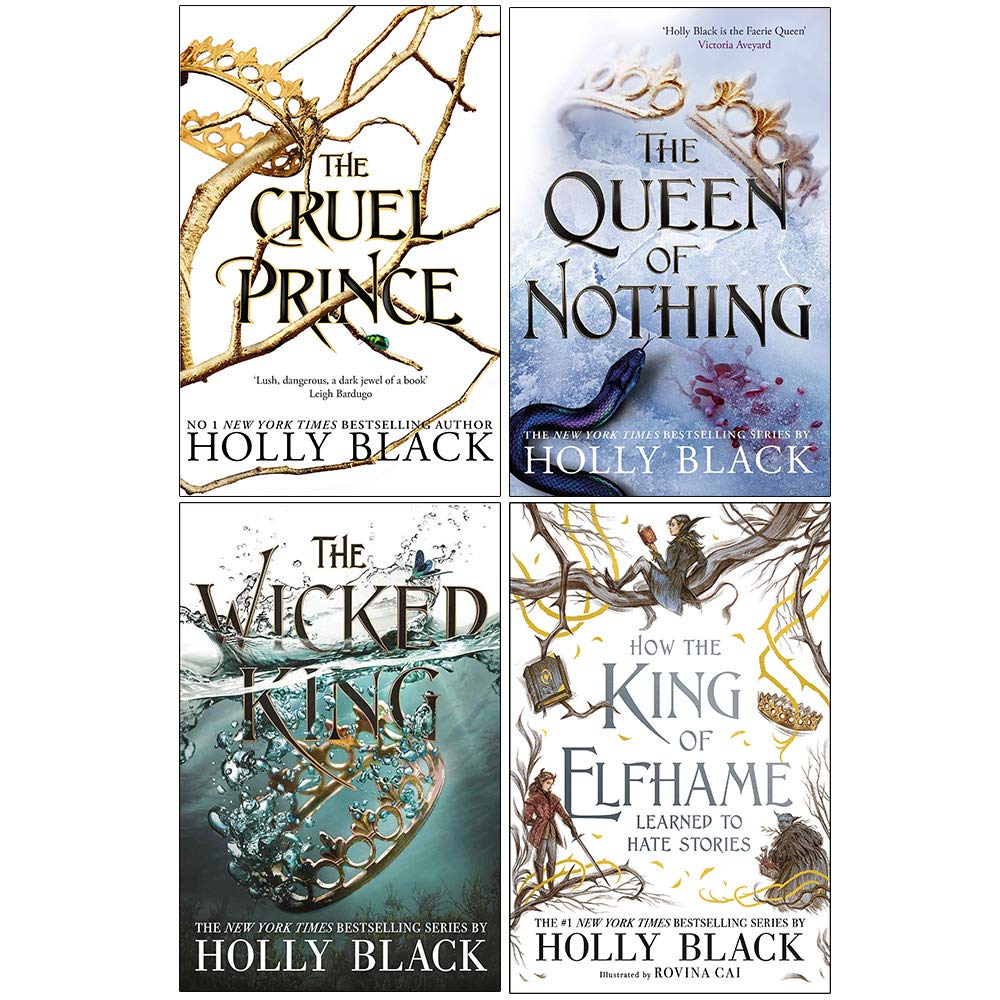
The Cruel Prince — Holly Black (The Folk of the Air, #1)
What it’s about
Jude Duarte has been living in the fae world since she was seven, taken there after watching her parents murdered. She wants power, respect, and to stop being treated as lesser in a court that considers her humanity a liability. Prince Cardan is the most insufferable, most magnetic, most dangerous person at court — and also the one she keeps ending up in conflict with.
The honest take
Holly Black wrote a significant chunk of the template for what modern fae romance books for adults looks like, and The Cruel Prince is her operating at full command of it. The fae world here feels genuinely old and strange — the danger is structural, not decorative. Jude is ambitious, ruthless, and deeply human in a way that makes her distinct from every fae around her. The romance is a very long game and Cardan is a deliberately difficult person to warm to in book one. By book three, the payoff is among the most satisfying in the genre. This is the trilogy commitment the title promises.
Spice level
🌶 this is considered YA.
Tropes
Human in fae world, enemies-to-lovers, court politics, slow burn, power dynamics, morally grey characters at every level.
Read this if
ACOTAR’s court intrigue was as compelling to you as the romance, and you want fantasy like ACOTAR that feels like it was written by someone who has thought seriously about what faeries actually are.
Give it a miss if
You need the love interest rootable from chapter one. Cardan takes real time.
What Readers Are Saying
- Holly Black’s prose is described as some of the most precise, poignant writing in fae romance, the kind people stop mid-page to reread. One high-profile reviewer called it “the most perfect thing my eyes have ever seen,” which is a sentence I respect for its commitment.
- Readers report being dropped into Elfhame without confusion or info-dump, which genuinely is rarer than it sounds in this genre.
- The found family and the sisters are a consistent highlight in four and five-star reviews, with Vivi in particular developing her own small but devoted fan club. The family dynamics are described as “realistic and nuanced in a way that felt like it could exist in real life.”
- The low-rating camp splits pretty clearly between “nothing of substance happens until past the 200-page mark” and “Jude is genuinely insufferable to spend time with.” One reviewer described her as having “only a few things she excels at: whining, complaining, being a nuisance, and making the most idiotic decisions ever.”
- Cardan’s early behaviour is the biggest single sticking point in critical reviews. One reviewer categorised him as the “beautiful/mysterious/bully-y” YA archetype that they always, always hate and noted that this feeling did not improve as they read. If that resonates with you as a reader, the later books won’t fix it.
- A meaningful number of readers came in after significant hype and left disappointed. The recurring phrase in those reviews is “unmemorable,” with one reviewer noting there was “nothing horrible, nothing good, just a meh.” That’s almost certainly a hype problem rather than a book problem, but it’s worth going in with tempered expectations rather than BookTok ones.
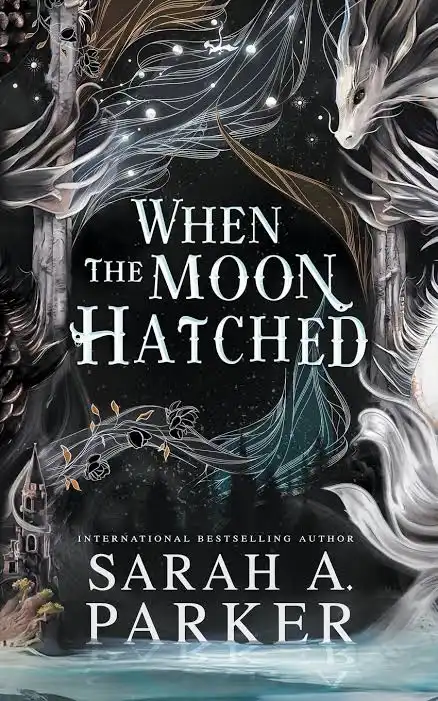
When the Moon Hatched — Sarah A. Parker
What it’s about
A world where dragons die and become the moons. A female lead who is part of a fae rebellion, captured by enemies, her complicated past unravelling from the first chapter in a world with one of the more original mythologies in recent fae fantasy. The romance is slow. The writing is genuinely beautiful.
The honest take
This is the one for readers who want the craft to be present alongside the fae world. Parker’s prose has a literary quality that’s harder to find in this genre than it should be, and the world-building is specific enough to reward paying attention. It is slower and more deliberate than most books on this list, which is either a feature or a problem depending on your reading mood. If what drew you to early ACOTAR was the atmosphere before the romance, this is the closest thing on this list to that experience.
Spice level
🌶🌶. Slow burn tension is real; explicit scenes are less frequent.
Tropes
Fae rebellion, morally grey FMC, slow burn, mysterious past, court danger, dragon mythology.
Read this if
You annotate. You want the craft to show. You don’t need the story to be fast.
Give it a miss if
Dense world-building with deliberate pacing isn’t what you’re in the mood for, or you need the romance front and centre from early on.
What Readers Are Saying
- Five-star readers consistently describe When the Moon Hatched as the most beautifully written book they’ve picked up in fae romance. The dragon-becoming-moons mythology is specifically called out as genuinely original in a genre that too often recycles the same world-building furniture.
- The FMC’s moral complexity is a recurring positive in high-rating reviews too, readers describe her as neither easy to love nor easy to dismiss, which makes her considerably more interesting than the average romantasy heroine and considerably more work to spend time with.
- Readers who went in looking for ACOTAR-paced slow burn often report frustration with how long When the Moon Hatched takes to deliver the romance. Several note the book is character-interior and atmospheric in a way that rewards patience but doesn’t suit every reading mood.
- The world-building density is the most common point of friction in lower-rated reviews. Readers who struggled describe the opening as asking for real engagement before it gives anything back, which is accurate. It does ask for that, and it does eventually give back.
- High-rating readers frequently describe this as a “re-read” book. The first read is immersive and the second read is even better because you catch what was being set up. That’s a specific type of book and a specific type of reader, and if you’re that reader, this is for you.
- The spice level disappoints readers expecting something more explicit. Multiple reviews note that the tension is very real, but the payoff is restrained compared to most fae romance books for adults, so go in knowing what you’re signing up for.
The Ones Your Algorithm Almost Showed You
Quicksilver — Callie Hart (Fae & Alchemy, #1)
What it’s about
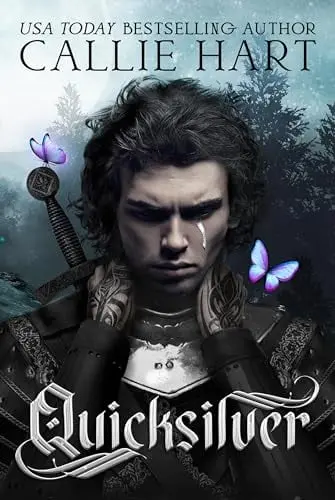
Saeris Fane is 24, has alchemical powers no one knows about, and makes her living picking pockets. After a deeply inadvisable encounter with Death himself, she is pulled into an icy fae world where she ends up bound to a fae warrior named Kingfisher who has his own agenda. A magic system unlike most in the genre. 104,000+ Goodreads reviews. The #1 NYT spot. Make of that what you will.
The honest take
Quicksilver earned its audience. The magic system is genuinely inventive, the found family is an actual emotional investment, and the last 200 pages are — by near-universal reader consensus — white-knuckle reading. The criticism is real too as the middle section has pacing issues that five-star reviews tend to gloss over, and the banter tips from sharp into juvenile in places. One reader described it as “ACOTAR from Temu” which is mean but has a kernel of truth worth knowing about. Go in with realistic expectations, and you’ll very likely have a good time.
Spice level
🌶🌶🌶. Fast to arrive, explicit, fits the overall pacing.
Tropes
Transported to fae world, enemies-to-lovers, alchemy magic system, morally grey MMC, action-heavy, banter-forward romance, found family.
Read this if
You want fantasy romance like ACOTAR that moves — plot alongside the spice, a magic system with actual rules, a shadow daddy MMC who earns his reputation.
Give it a miss if
You come primarily for the fantasy world-building rigour and expect it to hold up under scrutiny. Several readers who prioritise fantasy over romance found it thin. Also if you have strong feelings about the phrase “wet folds” being used more than once, perhaps, you know, prepare yourself.
What Readers Are Saying
- The found family and the alchemy magic system are the two things almost every positive review leads with. The magic mechanics surprised readers who expected yet another vague fantasy power set, and Saeris’s relationships with the ensemble cast are described as genuinely emotionally invested rather than decorative.
- Kingfisher has built a fandom that functions like a small religion. His nickname for Saeris — which translates to “most sacred” — is repeatedly cited as doing serious emotional damage across multiple readers.
- The last 200 pages are described near-universally as white-knuckle reading, with reviewers noting they genuinely couldn’t predict where the story was going. The magic system reveals, in particular, what makes the slower middle feel retroactively earned.
- Critical reviews are consistent on the pacing: the middle section drags, the banter between Saeris and Fisher is described as “immature” and going sexual too quickly, and one reader noted Fisher “didn’t talk like a fae who was thousands of years old.”
- The FMC has a devoted fandom and an equally vocal opposition. Five-star readers describe her as a “confident badass who actually thinks her decisions through.” Two-star readers note that she appears to completely forget her stated motivation — finding her brother — roughly 25% through the book, and never really recovers that plot thread.
- The most honest review on the whole Goodreads page belongs to a reader who wrote: “The girl version of Aladdin steals an expensive glove and almost gets her dumb brother killed. The hot guy talks about his penis size and is sarcastic a lot. Everyone has a really stupid name. I went into this fully expecting to hate it, so when I realised I was enjoying myself, I just stared at the wall in disbelief for a while. 4/5. I guess. Whatever. I don’t even care anymore.” That’s the book.
A Tongue So Sweet and Deadly — Sophia St. Germain (Compelling Fates Saga, #1)
What it’s about
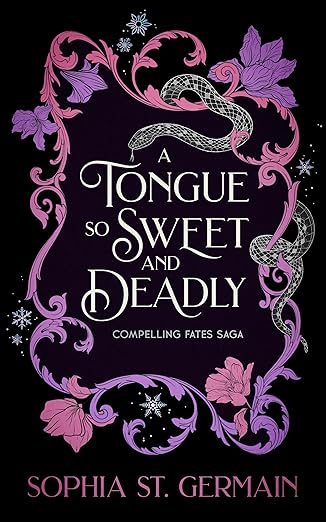
Half-fae Elessia has compulsion magic…she can make anyone do anything just by looking into their eyes. After a tragic accident, she ends up with a blood oath to the fae king. Five years later, he calls it in to infiltrate the human elections, find out whether the current regent is involved in whatever’s happening in the fae world, and try not to get killed by the fae guard assigned to watch her, who would very much like to eliminate her first.
The honest take
This is a genuine indie find. The blood oath mechanic is handled with real consequence, and the writer did a fantastic job. The pacing in the early chapters is the most consistent criticism… some readers DNFed before it opened up. The rewards come in the second half, and the last ten percent in particular is the thing that’s sending readers immediately into book two.
Spice level
🌶🌶. Present but not the book’s primary focus.
Tropes
Half-fae, blood oath, political intrigue, love triangle energy, slow burn, morally grey world rather than just morally grey MMC.
Read this if
You want indie fae books like ACOTAR that take their world seriously and have something genuinely new to offer in terms of magic and political structure. Also read if you’ve read all the famous books on this list already.
Give it a miss if
Fast pacing from chapter one is non-negotiable for you. The first half is politics-heavy, and the romance doesn’t dominate. Also, the characters snarl. A lot. Consider yourself fairly warned if you’re against that sort of thing in general.
What Readers Are Saying
- Readers describe screaming into the void at the last 10% and immediately opening book two, with the ending specifically praised for having so many things going on at once that people were reading it off the edge of their seats.
- The Merrick vs Loche debate is all over Goodreads. Some have vowed to riot if Merrick isn’t end game. The silver-haired death whisperer is winning the fandom vote by a considerable margin.
- The magic system — the split between elemental and mind magic, and the blood oath mechanics — is consistently praised as one of the more original elements in a genre that often recycles the same power sets. Readers who like a magic system with actual rules and consequences tend to call this out as the book’s strongest feature.
- One reader estimated the characters snarl or growl more than 50 times total and suggested making it a drinking game, noting you’d be drunk by page 20. This is the funny and accurate editorial feedback that we all appreciate.
- Loche, the first love interest, divides readers in a way that has become its own running conversation. Some find him charming and fun with genuine banter; others find him flat and are baffled that he’s positioned as the romantic lead when Merrick is right there being dark and complicated. One reviewer wrote: “maybe I’ve been Tamlined too many times.” Honestly? Valid.
- Critical reviews consistently flag the pacing in the first half as the point where they almost DNFed. The writing shows the kind of early-career tics (trailing dashes, one-line paragraphs for dramatic effect) that a tighter edit would have caught. It goes from incredible writing to random threads that weren’t quite stitched together. But for an indie read with limited resources for edits, I imagine, this is a fantastic book.
The Ones You Haven’t Heard Of (But Should)
The Crown of Oaths and Curses — J. Bree (The Mortal Fates, #1)
Read the two prequel novellas first. The Scepter and The Sword are not optional. Readers who skip them consistently feel lost and less invested.
What it’s about
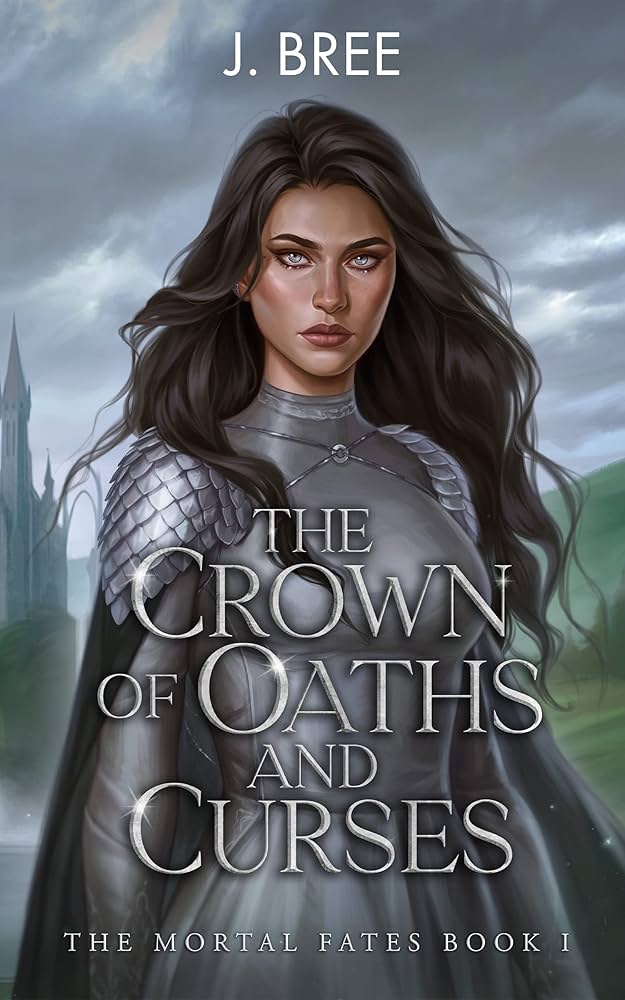
A centuries-long war between fae and witches with no end in sight. Rooke is a witch soldier assigned to protect Soren, a fae prince who treats her appallingly. She protects him anyway. This is enemies-to-lovers where the enemies portion is a genuine commitment… these two cannot stand each other in book one, which is either exactly what you want or not what you signed up for.
The honest take
This book splits readers almost in half and both camps have a point. The first fifty percent is slow, and the world-building is dense. The second half is what makes the investment worth it… it’s widely described as epic, thrilling, and the kind of thing that makes readers immediately start book two. Soren’s behaviour is extreme, and that is not a soft warning. If you need the MMC to be grumpy but secretly soft, this is not that book yet. The groveling is coming. It’s just not in book one.
Spice level
🌶🌶🌶. Book one is fully in the enemies phase. Explicit scenes develop across the series.
Tropes
Fae/witch war, forced proximity, bodyguard dynamic, enemies who are actual enemies, dual POV, slow burn across multiple books.
Read this if
You want the enemies part of enemies-to-lovers to actually mean something before the lovers part shows up.
Give it a miss if
You need the MMC to be charming at any point in book one, or slow-opening books are a genuine DNF risk for you.
What Readers Are Saying
- Five-star readers think that the FMC Rooke is one of the better female leads in fae romance right now…patient, strong, commendable under genuinely brutal conditions, and one of the few romantasy heroines who earns the praise.
- The second half of this book has its own devoted fan club among readers who pushed through the first half.
- Readers who love detailed fae/witch mythology consistently describe the depth of J. Bree’s world as one of the main reasons they continued the series past book one.
- Soren’s behaviour is the most contentious point in critical reviews. Lower-rated reviewers describe him as genuinely unpleasant rather than just grumpy, and note that the standard “he’ll get better” framing doesn’t fully cover what he puts Rooke through in book one.
- Not reading the prequel novellas first is a recurring regret in lower-rated reviews. Readers who skipped them describe feeling dropped into a story mid-way through with no emotional grounding for the characters or politics. The novellas are short. Read them first.
A Betrayal of Storms — Ben Alderson (Realm of Fey, #1)
What it’s about
Zack is half-fey, living in the human world, and thoroughly unprepared to prevent a war between the fae and human realms. His assigned guard — deeply inconvenient, persistently present — is more complicated than the word “guard” suggests. The world is queernormative, which means the fae politics and the romance operate in a world where who you love is not treated as a plot point.
The honest take
This is for readers who have been quietly frustrated that romantasy defaults to straight couples in every single fae court. Alderson is writing fantasy romance books like ACOTAR in a world where the queernormative setting is baked into the world-building rather than positioned as a selling point. The court politics are solid, the bodyguard dynamic works, and the fey world has real depth. The romantic tension is softer than most books on this list, which is either fine or frustrating depending on why you’re reading it.
Spice level
🌶🌶. Present but not the book’s main thing.
Tropes
Bodyguard MMC, half-fey protagonist, court politics, preventing a war, queer romance, queernormative world-building.
Read this if
You want fae court romance with actual queer representation at the centre and you love the bodyguard trope.
Give it a miss if
You come in expecting ACOTAR-level romantic tension — the will-they-won’t-they doesn’t stretch as far here, and if that’s the thing you’re chasing, this will feel like it’s holding back.
What Readers Are Saying
- Readers who love A Betrayal of Storms consistently describe it as easy, breezy fae romance that fills an ACOTAR-shaped gap without the emotional demolition. It’s great if you’re looking for something lighter.
- The queernormative world-building is called out as genuinely rare in this genre…readers who wanted queer fae romance without the queerness being treated as a dramatic element describe this as one of the very few books doing that properly.
- The court politics and bodyguard dynamic are praised by high-rating readers as the book’s strongest structural elements…the fey political world is well-realised, and the power dynamic in the central relationship does real work.
- Several readers found the internal voice ran younger than expected, which affected how the romance landed for them.
- The romantic tension is the most common complaint in lower-rated reviews.
- The general reader consensus is that this is a solid, enjoyable fae romance that fills a specific gap in the genre with care, the caveat being that expectations around romantic intensity need to be managed upfront. If you go in expecting a different kind of book, you’ll leave disappointed. Go in for what it actually is and you’ll likely enjoy it.
Still Looking?
If you’ve worked through this list and want something darker, the shadow daddy romantasy round-up is the natural next stop. And if KU availability matters to you, the best romantasy on Kindle Unlimited is updated regularly with spice and pacing notes so you know what you’re committing to.
Join The List
Sign up and get all the latest book news, reviews, offers, & viral recs. Unsubscribe at any time.
By subscribing you agree to receive emails from The Gilt List. You can unsubscribe at any time.
FAQ
The Cruel Prince by Holly Black is the most consistent answer for good reason. She built a meaningful part of the template that modern fae romance runs on — the court politics, the morally grey love interest who takes time to earn trust, the danger of being human in a world where humans are considered lesser — and the Folk of the Air trilogy delivers all of it with writing that holds up on re-reads. Start with The Cruel Prince and expect to need The Wicked King immediately after.
Several are, though availability shifts. A Tongue So Sweet and Deadly has been available on KU and is specifically noted by reviewers as a good KU find. The Gilt List KU guide is updated regularly with spice and tone notes so you know what you’re getting before you start.
A Tongue So Sweet and Deadly by Sophia St. Germain and A Betrayal of Storms by Ben Alderson both deserve significantly more space in ACOTAR-adjacent recommendation conversations. Alderson in particular is filling a real gap — queernormative fae romance at adult level — that the mainstream genre mostly ignores.
Mostly, with one honest caveat: the middle section has pacing unevenness that five-star reviews gloss over, and the banter tips into juvenile territory at points. If you push through to the second half, the final act and magic-system reveals are widely agreed to be worth it. This is a guilty pleasure read, so if you know you’re into that sort of thing (mee too, me too) then you’ll love it.
Yes. The Scepter and The Sword provide the backstory that makes the main book’s character dynamics land. Readers who skip them consistently feel less invested and more confused. They’re short. Just read them.
Use the table at the top as your first filter. For pure fae court craft, The Cruel Prince. For fae romance that moves fast with a shadow daddy MMC, Quicksilver. For darker, slower, and more atmospheric, When the Moon Hatched. For indie fae with a clever blood oath mechanic and an ending that breaks readers, A Tongue So Sweet and Deadly.