
You added the fight scene, the argument, the long ride through the mountains where it rains at the crux of emotional distress. You even made someone bleed, a lot. And your beta readers came back and said the same crazy making thing anyway: it feels slow.
A scene can be busy and still feel stuck. When a reader says a novel feels slow, they mean nothing is changing. The options on the table, the danger, what the characters understand, how they feel about each other, the question the reader is trying to answer. The plot walks on the spot, so to speak.
For more writerly advice check out the writers hub or How to Start a Fantasy Novel.
Why Your Fantasy Novel Feels Slow: Takeaways
- Slow usually means nothing is changing, even when plenty is happening.
- Action does not fix a weak scene. A fight that changes nothing still reads as slow.
- Readers stay for change: danger, options, knowledge, relationships, stakes.
- Fantasy drags when worldbuilding interrupts the conflict.
- A scene with a goal, motivation, and conflict almost always moves.
- Chapter endings need movement, or the next one starts from a standstill.
- If your opening feels slow, the reader does not yet know what to track.
Why a Busy Scene Can Still Feel Slow
The scenes that get flagged as slow are usually busy:
- A fight where everyone ends up where they started, same information, same plan.
- A council meeting where five characters take turns saying the threat is bad.
- A travel scene full of weather and geography with no pressure riding along.
- A magic lesson that explains a system and costs the character nothing.
Things happen in all of them. None move the story, because the reader leaves knowing and feeling exactly what they did walking in.
Does Your Scene Have a Goal, Motivation, and Conflict?
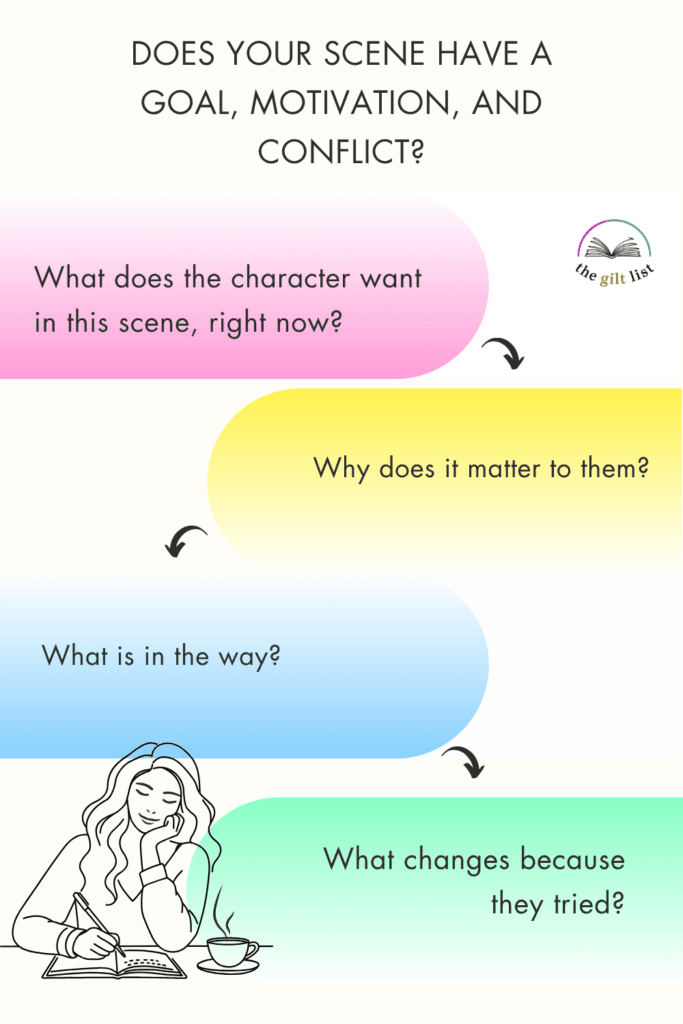
Check the GMC of the scene: goal, motivation, conflict, the model Dwight Swain laid out decades ago. Four questions:
- What does the character want in this scene, right now?
- Why does it matter to them?
- What is in the way?
- What changes because they tried?
If you cannot answer the first one, the scene won’t work, and no amount of action will help. A character who wants nothing is a camera, and watching a camera pan around your world is the slow feeling readers keep describing. A more subtle issue that can happen with this is knowing yourself what the goal is, and forgetting to make it obvious on the page.
If you can answer the first three and the fourth comes back as “nothing,” make sure that nothing isn’t emotionally, because if they emotionally change for better or worse, great. If not, the scene might need more.
Is Your Worldbuilding Interrupting the Tension?
A character is trying to sneak into the temple. Tension is building. Then the chapter pauses for four hundred words on the temple’s history, the order that built it, bla bla bla. By the time we get back to her or him, the pressure is gone. The reader has lost interest.
The worldbuilding is not the problem. The timing is. Add that history earlier in the story or try this: Give us the one piece that makes sneaking in harder right now: the priests who never sleep, the floor that remembers footsteps, the law that makes getting caught a death sentence and how that law came about. More on this in the Fantasy First Chapter Guide, but the short rule is to carry the world with consequence, not explanation.
Why Action Scenes Sometimes Feel Flat
Writers reach for action when a scene drags, which often makes it worse. Action without stakes is just pretty dance choreography:
- A battle the reader has no investment in, because we do not yet care who wins.
- A magical duel where the rules are unclear, so we cannot tell who is winning.
- An argument that ends with the relationship exactly where it began.
- A chase with no consequence attached to getting caught.
These all need to be cut. Strong internal reactions will always trump pointless action.
What Changes by the End of the Scene?
By the last line, what is different? Run the scene against this and look for one yes:
- The character’s options narrowed or opened.
- The danger rose or changed a bit.
- Someone learned something that changes what they do next.
- A relationship switched up: more trust, more strain, more wanting.
- The character’s desire deepend, or a new one appeared.
- A fear got worse, or was explicitly stated for the first time.
- A cost arrived.
- A plan formed, broke, or changed.
- The question the reader is tracking got more urgent.
Are Your Scenes Repeating the Same Beat?
Slow middles come from repetition the writer cannot see, because each scene feels different while doing the same job. This is subtle, but once you catch it, can make a world of difference:
- Another training session that teaches a skill but that’s it.
- Another argument that leaves the relationship unchanged.
- Another council scene that restates the same threat in new words.
- Another travel leg that delays the next real choice.
You’ll know if this is true for you because you can name this same scene else where in the story, and it isn’t mirroring with intention.
How to Fix a Slow Fantasy Scene
- Name the character’s goal in the scene, make it obvious. If there isn’t one, give them one.
- Cut the worldbuilding the scene does not need to function right now.
- Add a consequence, so failing has a cost.
- Make the character choose, rather than react to everything.
- Add a barrier to the goal.
- Change a relationship, goal, or the danger by the end.
What If the Slow Part Is Your First Chapter?
If the reader cannot tell what the character wants, what the threat is, or what question they are supposed to ask, then everything reads as setup, and setup with no stakes reads as slow no matter how much is going on. That is a big part of why fantasy openings get abandoned, which I broke down in why readers DNF fantasy novels.
If readers keep drifting in your opening pages, the first chapter critique finds where the pressure is leaking, and the Fantasy First Chapter Checklist lets you check it yourself first. If you’re worried about this issue all over your WIP I also have a manuscript critique available that can spot this and so much more.
Frequently Asked Questions
Usually because the scenes are busy without changing anything. If the danger, the character’s options, the relationships, and the central question all stay the same across a scene, readers feel that as slowness even when a lot is happening on the page.
Yes. Action without stakes is just movement on the page. If the reader does not care who wins or what it costs, a fight or chase feels slow no matter how fast it is written.
Give each scene a clear goal, attach a cost to failing, and make sure something changes by the end. Cut worldbuilding that pauses the tension rather than sharpening it. Pace comes from change.
It can, when it arrives between a character’s goal and the obstacle in front of them. Worldbuilding that sharpens the current problem adds pressure. Worldbuilding dropped in as background leaks the tension.
A character who wants something, a reason it matters, something in the way, and a real change by the last line. When those are present, even a calm scene moves. When they are missing, even a battle stalls.
Ask what changes by the end. If the answer is nothing, the scene is decorative and should either earn a change or get cut to the part that does. If two scenes do the same job, merge them.
Often they mean the story feels like it is circling. Repeated scene functions, missing stakes, and worldbuilding that interrupts pressure all produce that. Look for where the same beat repeats or a scene ends where it began.