
Writing the first chapter of a fantasy novel is so difficult, but what’s harder is sending that baby out into the world with your fingers crossed, hoping that no one crushes your writerly heart. The first chapter needs stakes, promises, premises, characterisation, enough worldbuilding but not too much, and so much more.
When you are preparing to query agents, the stakes get even higher. An agent in the slush pile isn’t reading your manuscript with a warm cup of tea and a forgiving heart. They are looking for a reason to say no so they can clear their inbox. Readers do the exact same thing on Kindle Unlimited, so you’re not safe there either. Yikes.
So, before you hit send on that query letter, you need to look at your opening pages through the lens of reader behavior, structural integrity, and cognitive ease. This novel opening checklist is designed to help you audit your first chapter for the hidden flaws that cause immediate DNFs.
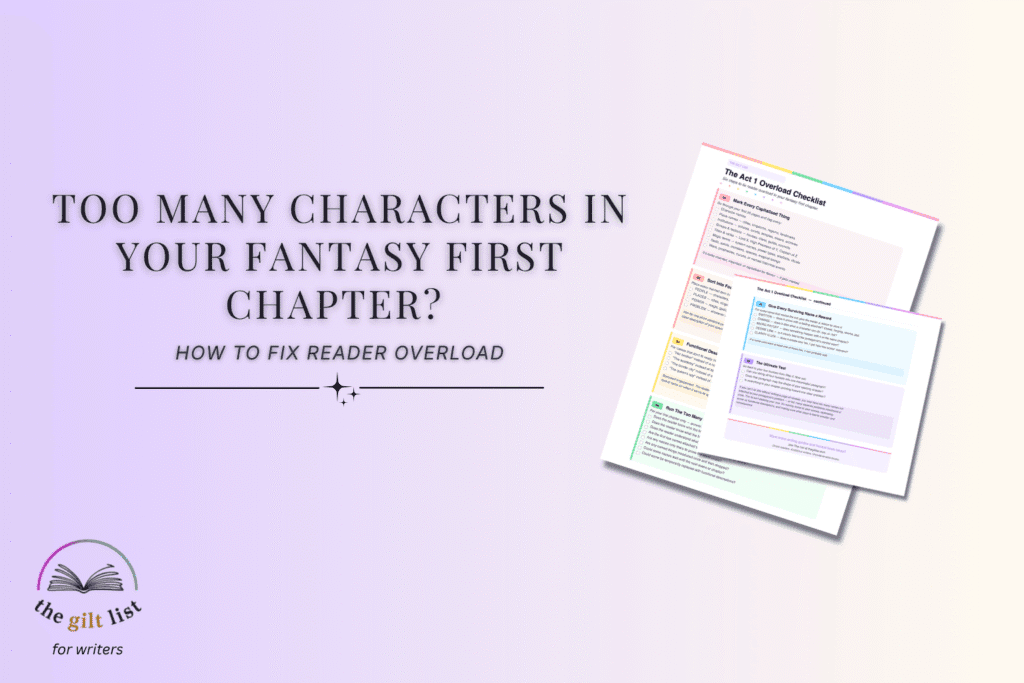
For more posts like this that help you walk through your novel with checklists and tools check out the Writers Hub if you want a tool that will audit your entire novel (without AI) then our first act auditing tool is the place to start. But if you’re looking for a downloadable checklist for first chapter issues I have one here.
The 10-Point First Chapter Checklist Before Querying
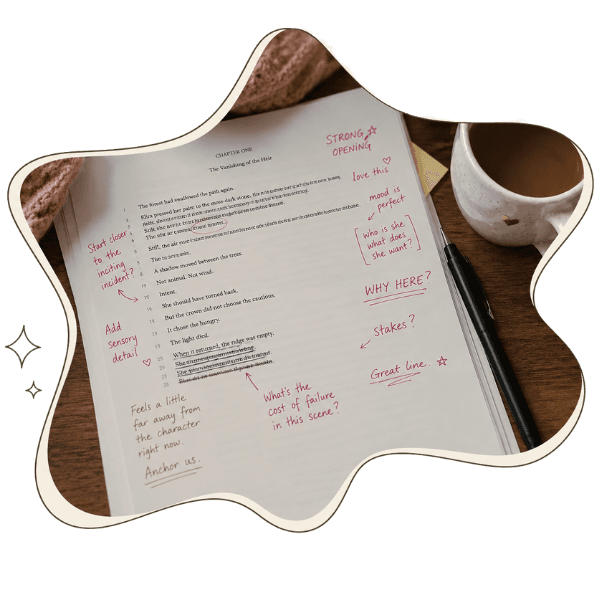
1. Hook the Reader Instantaneously
When I wake up, the other side of the bed is cold. That is all it took for Susanne Collins to hook millions of readers in The Hunger Games. Your opening line does not need to explain your complex pantheon or your magic system, that’s for your entire text to do; instead, you need to establish immediate stakes, feel, characterisation and theme. If your first sentence is a passive description of the weather or a dense historical fact, you are mismanaging your reader’s attention span. My Susanne Collins first chapter breakdown will walk you through this and more for your opening.
2. Immediate Character Desire
Every writing guide tells you that your main character needs a goal. But on page one, they need micro-desire. What do they want right now? Even if it’s just trying to avoid being seen, stealing a piece of fruit, or surviving a boring ceremony. A character who wants nothing creates a scene that goes nowhere. More on this in my blog on creating character desire.
3. The Character Overload Problem (Avoiding Name Overload)
If your first five pages introduce the protagonist, their best friend, their mother, the tyrannical king, three rival factions, and a dead ancestor, you have a cognitive overload problem. Readers cannot build emotional investment when they are constantly flipped through a mental index, trying to take a thousand notes. More on my undoing reader overload guide here.
The Slush Pile Rule: Keep the focus on your point-of-view character and the immediate scene partner. Let the rest of the cast filter in naturally once the reader cares enough to remember them.
4. Processing Fluency and the Reber Effect
The human brain is fundamentally lazy. It interprets cognitive ease as pleasure. In psychology, this is known as processing fluency (or the Reber Effect). When you dump paragraphs of complex world-building, fictional terminology, and weird apostrophe-laden names on page two, you shatter that fluency. The reader’s brain has to work too hard to process the data, which triggers boredom or frustration.
5. Spatial and Visual Anchoring
Do your characters exist in a distinct physical space, or are they talking heads floating in a white void? Before two characters start arguing or exchanging witty banter, the reader needs to know where they are standing, what the air smells like, and what the physical boundaries of the room are. Without spatial anchoring, the reader cannot visualize the scene, and unvisualized scenes are instantly forgettable.
6. The World-Building Placement Test
The problem with your speculative world-building is rarely the concepts themselves, it’s almost always where you put them on the page, including how much literal white space you have. If you explain how the magic matrix functions before we see a character actually suffer its consequences, you’re going to struggle to get anyone to care. I have a guide on where to put your fantasy worldbuilding for anyone who needs it.
7. Status Shifts and Power Dynamics
A great first chapter is a miniature story with its own arc. Look at the power dynamic at the start of your opening scene compared to the end. Did your main character lose status? Did a secret shift the balance of power? Think of it more like a short story, with enough questions to wish we had another part.
8. Micro-Pacing and Sentence-Level Friction
Micro-pacing is about how quickly information is revealed and how your sentences move. Read your opening pages aloud. Are you using three adjectives when a verb would do the work? Every line should either complicate the character’s immediate situation or deepen the narrative mystery. Cut your darlings as they say. But don’t kill your voice in the process. Tough I know.
9. The Subgenre Contract
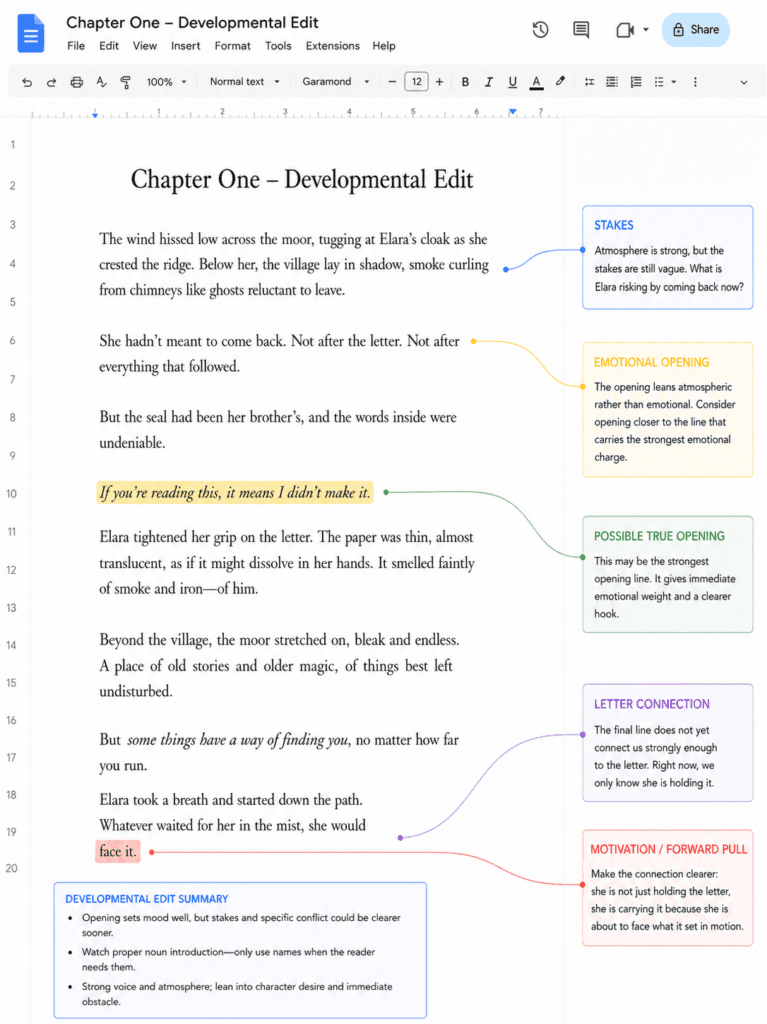
Your first chapter establishes a binding contract with the reader. If you are writing a high-steam romantasy, we should know that love/lust would fix this characters problems (maybe they don’t love themselves, maybe they feel ousted). If it’s something gritty, or political dark fantasy-esque, you need it to be cut throat, and grim from the get. Don’t promise the wrong tone. I did a piece on this for Innamorata, where readers assumed romantasy from the blurb and got grimdark, needless to say, there was backlash. See the Innamorata Romantasy Backlash here.
10. The DNF Exit Point Check
Look closely at your scene breaks and the final lines of Chapter One. Is there a clear, unresolved issue that forces the reader to turn the page? Does your character make a decision, did something truly awful happen? If your chapter ends with the protagonist peacefully falling asleep or neatly resolving their immediate problem, you’ll get an instant no from the agent.
How to Audit Your First Chapter and Move Forward
Self-editing is notoriously difficult because you already know everything about your world. Your brain automatically fills in the blanks, which means you are blind to your own info-dumps and pacing gaps.
If you want to take this framework and apply it directly to your manuscript, make sure to read through our comprehensive index of writing craft guides for fantasy and romantasy to master scene dynamics and processing fluency.
Ultimately, you only get one shot to land in an agent’s inbox or capture a reviewer’s attention. If you’ve run the list but still feel that lingering anxiety about your structural hooks, it might be time for an expert, objective eye. You can book a professional First Chapter Critique for fantasy and romantasy with me, and we’ll take a look together.
First Chapter Audit: Frequently Asked Questions
The two most common reasons an agent will DNF (Did Not Finish) a fantasy opening are prologue lore dumps and a complete lack of character desire. If your first five pages function as a historical textbook explaining your magic system or political factions instead of anchoring the reader in an active scene with immediate momentum, an agent will close the file and clear their inbox.
On average, an ideal fantasy first chapter length sits between 2,500 and 4,000 words. While there is no rigid rule, anything under 1,500 words often lacks real-world building, while anything over 5,000 words usually suffers from micro-pacing issues, structural bloat, or excessive scene transitions that belong in Chapter Two.
Yes, but only if the prologue establishes a tight subgenre contract and immediate narrative stakes. If your prologue features a different character or time period but delivers high tension and a core mystery, it works. However, if your prologue is just a disguised info-dump used to explain the backstory before the actual plot starts in Chapter One, you should cut it entirely. Trust your reader. If you really want them to learn more, add it to the end with a nice glossary and more bonus features.
You should limit your opening chapter to your point-of-view protagonist and one or two essential scene partners. Introducing a big cast triggers immediate cognitive overload for the reader, breaking their immersion before they can build an emotional connection with your MC.
The best way to hook a reader instantaneously is to give them a desire the reader can connect with (especially around childhood fears), give quick fun pacing, throw in unexpected expectations of tropes in an enjoyable way, and interesting worldbuilding. Avoid passive descriptions of the landscape, weather, or routine waking-up sequences.