
If your scene feels slow, the answer is probably not a fight, a fire, a kiss, or a murder. That is the instinct for a lot of writers, though. The scene drags, so we throw an event at it right? And sometimes it perks up for a page and then sags again, because the event did not fix the actual underlying problem. The problem being? Conflict.
Conflict is what the character wants vs. what they are afraid of, what they are hiding, what it will cost them if this goes wrong, the very bad things. Get that working in the scene and a conversation over a dinner table can have your reader racing faster through pages than any gory battlefield ever would. Let’s get in to how to do it right.
How to Make a Slow Scene Interesting: Takeaways
- Random action does not help if nothing changes because of it.
- A calm scene works when it has a clear goal, motivation, and conflict.
- Dialogue grips when something can be won, lost, hidden, or exposed.
- Worldbuilding should make the scene harder, not pause it.
- Something has to change by the end, or the scene reads as filler.
What Is This Scene Actually For?
Before you fix a slow scene, work out whether it should exist. Three questions:
- Why is this scene in the book?
- What would break if you cut it?
- What does it change?
If the honest answers are “to show the castle,” “to show her love of music” “to show what great friends she has” “nothing,” and “nothing,” you may not have a slow scene. You may actually have a scene to delete. That is a win, not a failure, because the scenes around it move faster once it is gone. Everything will read better once that scene is gone, I promise. Now, if that scene is there for a reason, but still drags….we have more work to do.
Does Your Character Want Anything in This Scene?
Most slow scenes are missing a scene-level goal. The character is present, things occur, and they are not trying to get anything, so the reader has nothing to track. The reader isn’t looking for clues in the room to see how they can win alongside your character. Give them something to want right here, right now, separate from the big book-long goal:
- Get a piece of information out of someone.
- Hide a secret through a conversation that keeps circling it.
- Avoid answering a question without seeming to avoid it.
- Win someone’s approval, or refuse to give their own.
- Leave the room without being noticed.
- Test whether an ally can be trusted.
- Resist an attraction they have decided to ignore.
- Delay a magical consequence creeping up on them.
Why Does the Goal Matter?
A goal with no weight behind it still produces a slow scene, so we’re not quite fixing our scene yet if the goal isn’t a little scary. Tie the want to a fear, a cost, a desire, a relationship, survival, standing, magic, shame. “She wants to leave the family dinner table” is flat. “She wants to leave the dinner before her hands start to shake and give away what curse she started” has motivation worth trying to figure out alongside a character. But this can be small too. She wants to leave the dinner table to call her friend and tell her a juicy piece of gossip tied to a murder mystery, but the last time she left the dinner table, she ran away from home; now she has to convince her family that’s not the reason this time. Also, a goal and a juxtaposing position.
What Is Getting in the Way?
Conflict can be subtle in these ways too:
- Another character with their own agenda.
- A rule that limits what the character can say or do.
- A lie they have to maintain.
- An attraction they are fighting.
- Their own fear or guilt.
- A physical limit: exhaustion, injury, hunger.
- A magic cost that makes the easy option dangerous.
- A social expectation that punishes the obvious move.
A scene where someone wants something and something is in the way is almost never slow.
How Do You Give a Dialogue Scene Stakes?
A conversation grips the reader when something can be won, lost, hidden, exposed, or misunderstood in it. Flat dialogue is people exchanging information. Tense dialogue is people trying to get or protect something while they talk. The absolute best way to do this is to sit down with each character and figure out what they’re hiding, what they feel, what they feel and can’t say, and their motivations before every single response they make. You’ll find every character butts up against every other in one way or another, and it will change the way you write dialogue forever. The words they say will no longer be the polite, logical response, but layered in a way the reader will sense, even if they don’t know the reasons.
Can Worldbuilding Make a Scene Tenser?
Yes. Fantasy has an advantage that a lot of writers can waste. Your world is full of rules, and rules make scenes more layered. What rule can your world have that butts against your character’s goal?
- A court rule that forbids the character from saying the one thing they need to say.
- Magic that reacts to lies, so every careful half-truth is a risk.
- A religious law that forbids touch, charging a whole scene with what cannot happen.
- A class system that shifts the power in the room the moment someone of higher rank speaks.
- A curse that puts a clock on the conversation.
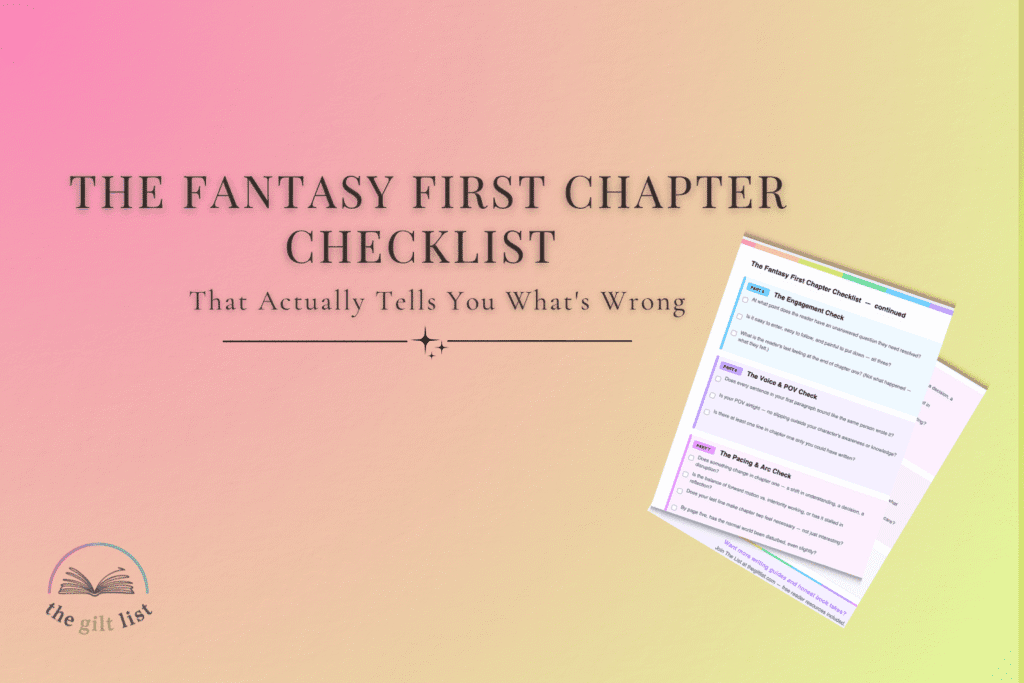
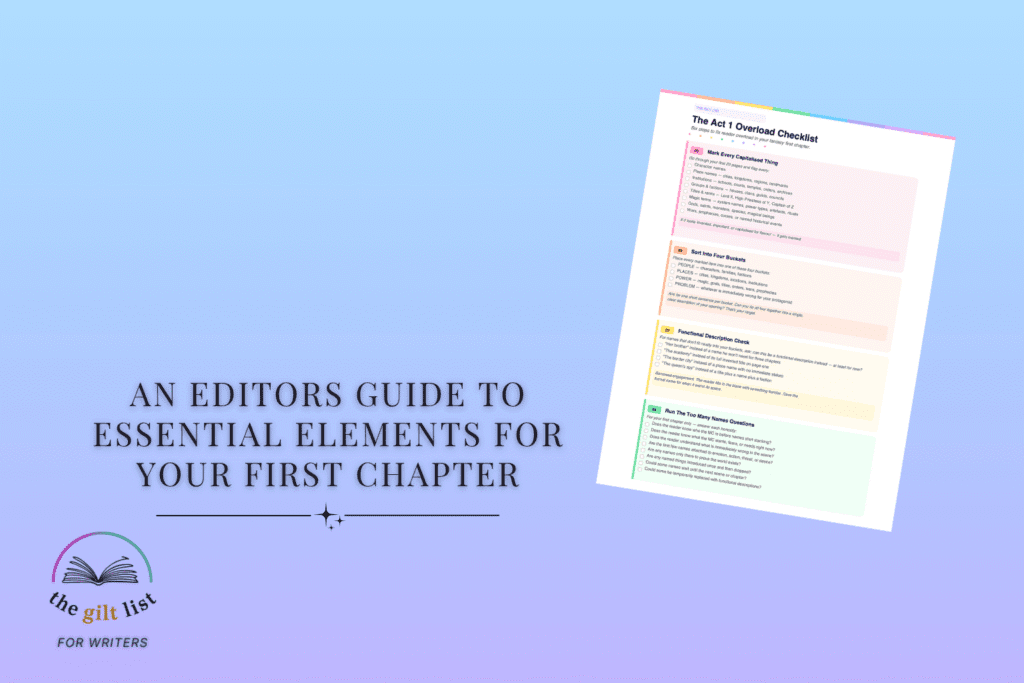
More on this in the Fantasy First Chapter Guide.
What Changes by the End?
A slow scene usually fails because it ends where it began. Make at least one of these different by the last line:
- New information that changes what the character will do.
- A changed plan.
- A shift in a relationship.
- A secret exposed, or nearly exposed.
- A choice narrowed.
- A fear made worse.
- A new cost on the table.
A scene that moves rarely reads as slow, even when it is calm on the surface. See my guide on chapter endings to see more about how to achieve this.
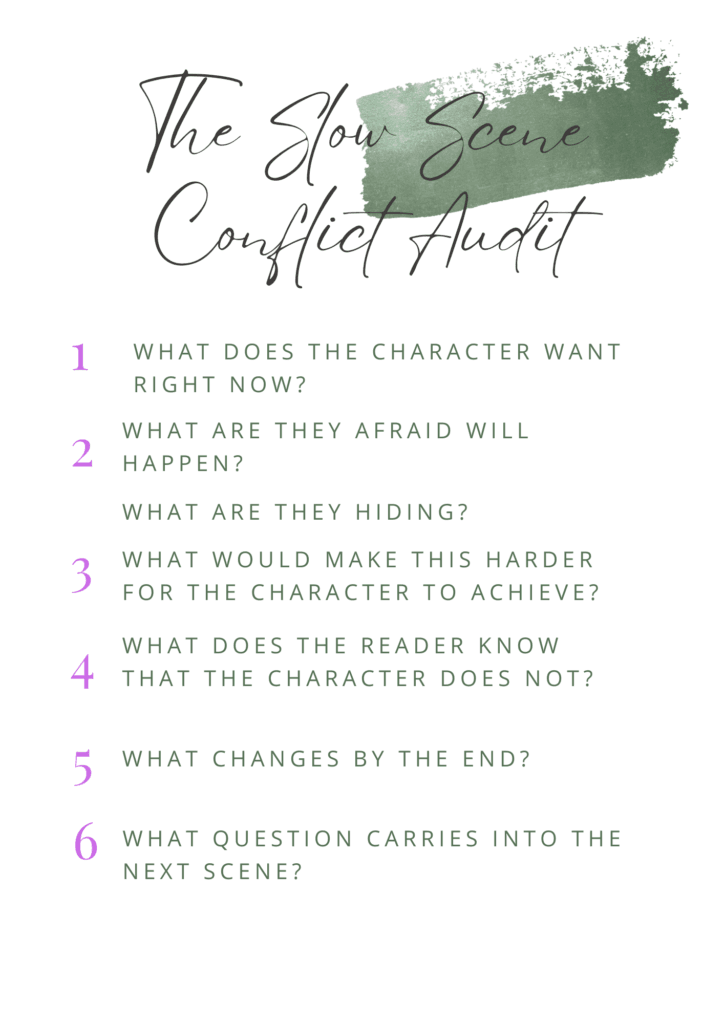
The Slow Scene Conflict Audit
When a scene drags, run it through this before you reach for an explosion:
- What does the character want right now?
- What are they afraid will happen?
- What are they hiding?
- What would make this harder for the character to achieve?
- What does the reader know that the character does not?
- What changes by the end?
- What question carries into the next scene?
Most slow scenes fail two or three of these. Fix those and you rarely need the random fight. If the scene that drags is in your opening pages, the Fantasy First Chapter Checklist helps you find which kind of pressure is missing.
Want to Find Where Your Scene Loses Pressure?
A slow scene is rarely begging for more action. It is begging for a goal, a reason that goal matters, something in the way, and one real change by the end. Tighten those and the same calm scene starts to grip, no extra bloodshed required.
If this is happening in your opening, start with the Fantasy First Chapter Checklist. If you want another set of eyes on the actual pages, the first chapter critique shows you where the scene is losing pressure and why. If scenes lose pressure all through the book, developmental editing covers the whole manuscript. More craft breakdowns are in the writing guides hub.
Frequently Asked Questions
Give the character a clear goal in the scene, a reason it matters, and something in the way, then make sure one thing has changed by the end. Pressure, not extra action, is what turns a slow scene tense.
Put something at risk in the scene itself: a secret that could slip, a question the character must avoid, a rule that limits what they can say. Tension comes from the chance of losing or exposing something.
Every scene needs some form of pressure, which is broader than conflict. That can be an obstacle, a secret, an internal struggle, or a cost. A scene with no pressure at all is usually filler.
Give one or both characters something to get or protect during the conversation. Flat dialogue is an exchange of information. Tense dialogue is people trying to win, hide, or avoid something while they talk.
Yes, when it presses on the scene instead of pausing it. A court rule, a magic cost, or a religious law can make a calm moment harder and tenser.
Ask what would break if you removed it and what it changes. If nothing breaks and nothing changes, it is filler, and the book usually moves better without it.
Usually a missing goal, missing stakes, or worldbuilding that interrupts the tension. The scene has activity but no pressure and no change, so the reader feels it circling.