
The Sixth Faction is incredible. It is fast, absorbing, and one of those books that makes you stay awake until the sun comes up. There really was never a dull moment for me.
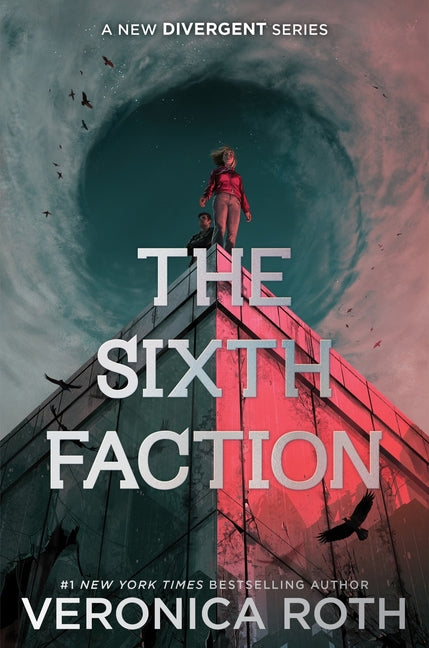
I’ve already written about what returning to Divergent means to me, and why I defend the original ending. This series mattered to me long before I was approaching books with an editor’s brain. I’m pleased Roth has returned to this world, especially with how much further we have come as a culture when it comes to young women’s media.
For those not in the know, a book written for young women is always one that is brushed off, but I think this series deserves a serious eye. And I want to take this version seriously, too. There are changes here that make the world more convincing, and others that leave me less emotionally attached than I was the first time around. But my feelings may change by the end of the duology. So don’t freak out yet if you totally disagree with me.
With all that said, the first half of this review is spoiler-free. Further down, the detailed plot discussion and my predictions for book two can be found inside closed dropdowns so you don’t see any spoilers by mistake. Let’s get into it!
The Sixth Faction review: takeaways
- The Sixth Faction is an alternate-universe reimagining of Divergent, beginning a new duology rather than continuing the original trilogy.
- The pacing is excellent. This is a quick-feeling read that will keep you on the edge of your couch.
- Abnegation feels more alive and believable, although I missed the friendships and shared experiences of Dauntless.
- Tris and Four’s attraction needed another scene or two of tension for me. Their first kiss caught me off guard.
- The multiple viewpoints give us more access to the wider conflict, but some side characters feel less developed.
- I enjoyed it and want to read the sequel. Whether its biggest changes pay off is still hanging in the air.

At a glance
- Author
- Veronica Roth
- Published
- October 6, 2026
- Series
- First book in a duology
- Next book
- The Last Testimony
- Genre
- YA dystopian fiction with romance
- POV
- Tris and Four in first person; Caleb in third person
- Connection to Divergent
- An alternate timeline, rather than a sequel
Roth describes this as a reimagining that new readers can enter without having read Divergent. My recommendation is slightly different, to be honest. You can start here, but I think the original gives you a fuller understanding of the factions and makes the comparisons more rewarding. If you read this, and then go on to the trilogy, you may still get the entire experience, but I’d personally start with the trilogy. Roth discusses the new book in her newsletter.
Should I read The Sixth Faction?
Read it if:
- You want to revisit Tris and Four in a story that takes them somewhere different.
- You enjoy fast dystopian fiction with conspiracies, rebellion, and difficult loyalties.
- You were curious about life inside Abnegation and the factionless rebellion.
- You like comparing how different experiences change familiar characters.
- You wanted more answers as to what was happening in the background of rebellions.
You may not fall in love if:
- The gradual development of Tris and Four’s relationship was your favourite part of Divergent.
- You want the same attachment to the supporting cast.
- You loved the training, friendships, and faction experiences at Dauntless.
How does it feel to read?
Fast. Very fast, and in a way I enjoyed. It’s clear, Roth hasn’t lost her touch and is still a brilliant writer.
There is always something happening, something to question, or something pushing Tris into the next problem. I never found myself waiting for the story to get going. If you’re looking for a book that makes it easy to keep turning pages, this does that job beautifully.
But I did want more space inside a few of those developments, I found myself saying, hang on, why did that happen then? That is most noticeable in the romance and, later, in a family conflict I’ll discuss below the spoiler warning.
I get why this happened. Sharing the page across viewpoints leaves less time for each character’s development, so shortcuts had to be made…but I’m not sure all of them worked, especially if you haven’t read the original series.
Does Tris and Four’s romance work this time?

Obviously, we all want Tris and Four together. Their attraction just felt a little sudden to me.
I actually got to their kiss, went “What?”, flipped back to the start of the chapter, and read it again… I was that bamboozled. Perhaps another scene or two would have had me cheering that moment on more. Maybe an almost-kiss the scene before.
Maybe I missed that tension building scene somewhere in the haze of all the action so I didn’t quite get the build up I expected? Who knows.
What did work is that we get a lot of Four saying he can’t stop thinking about Tris and debating her a lot. In a way that makes you think: just fall for her already dammit.
However, her attraction to him was less remarkable to me; I can’t pull a line off the top of my head for it.
In the original series, they go through a lot of life-and-death situations, saving each other, really. In this version, she seems to be fighting for him, but also for a version of herself. She has more of the power and needs Four less. It makes this romance believable, but not as earth-shattering. You know?
I’m concerned that, in the end, there was a leaning on their love being fate. That Tris and Four simply belong together.
Of course, they’re going to kiss. We know these two.
But with so much else being proven as completely changeable…it doesn’t sell me. Their relationship needed its own reasons to become both inevitable and dire, making them both unable to live without the other. Especially with what happens in the end. Which I will not give away here; you’ll have to read below.
This reminded me of one of my concerns in my Alchemised review. When stories have an original and we translate them, how much emotional history can a new version of a story reasonably borrow from the one its readers already love? Paying homage for fans is important, but can also cause development problems for a writer who is too deeply immersed in their work. Or an editor very familiar with past stories.
If the anticipation is your favourite part of a romance, try my list of standalone slow-burn romantasy books for your next read.
Is the worldbuilding better?
Abnegation is one of the strongest parts of this version.
It feels more alive, more real, and easier to imagine becoming an actual community. I could see something like a religious order or monastic commune, except with families and children growing up inside it. It made it feel more harrowing, borrowing from what we know of cults like this in our own world.
That makes Tris’s discomfort more interesting. In this version, you can clearly see, she’s basically a cult survivor.
The wider faction world feels less fully experienced, though. I would recommend reading the original series if you want a stronger understanding of the factions as places people inhabit. Here, the speed and range of viewpoints give us plenty of internal and political information, but I missed some of the scenes where we simply spend time with people inside their faction. I’m not sure we’ll get that in this duology. (Maybe we do in part 2? Pretty please?)
What about the side characters?
I was less attached to them.
The factionless didn’t give me the same enjoyment as Dauntless did in the original. I missed the friendships, the training, the action, and the smaller experiences that made the people around Tris feel like people I wanted to keep following.
Christina, particularly, seems to disappear halfway through the story. I’ll discuss what happens to her below, but the effect is that an important relationship loses its place in the book.
Peter also has a much smaller ongoing presence than I expected. I suspect he’ll come back later, although that is a prediction based on what fans would expect, rather than something this volume promised to resolve in the text.
My guess, yes again, is that the multiple viewpoints contribute to this. There is more to fit in. Something has to give, and for me it was some of the enjoyable faction scenes and time with the supporting cast.
All of this makes it seem like I didn’t enjoy the book. Ach. Nothing could be further from the truth; it’s one of my fave reads this year. I liked knowing more, and getting a stronger female lead with grit is a great payoff. The worldbuilding in this story is top notch. But I also wanted to love more of the people. I’m a big character-driven reader.
Is it better than Divergent?
For pace, it’s excellent. For making Abnegation feel plausible, I think it does more than the original first book.
For romance development and attachment to the side characters? I preferred Divergent. But maybe that’s the point. You don’t really want an AU to redo what it did the first time around anyway.
So, this doesn’t make it a disappointing return. I enjoyed reading it, and its changes give me plenty to think about. I read it every spare moment I had, and gobbled every bit of it up. I was not disappointed and would read it again right now. There were still things I would have liked to see improved…isn’t that every book, though? Plus, maybe the next part will make me rethink some of the criticisms.
For more spoiler-free recommendations, you can visit the review hub. Otherwise, this is your last chance to leave before I get into the details.
Spoilers: The Sixth Faction and the entire original trilogy
What happens in The Sixth Faction?
Read the plot summary — spoilers
Here is the bird’s-eye view before I get into what these changes did for me.
The Choosing Ceremony and Abnegation
Beatrice Prior expects to leave Abnegation for Dauntless. It’s what is written down in her test, and you can tell how much she loves the faction. Then Evelyn’s attack interrupts the Choosing Ceremony, killing someone from an Abnegation family she knows. When she makes her choice afterwards, grief and fear pull her towards family and the wrong choice (at least in her mind at first).
Caleb chooses Erudite; Beatrice stays in Abnegation.
Staying exposes a different side of her home faction, which is great for readers who love the series. We’re introduced intimately to the Memory Vault, which gives its leaders control over what people remember. With it, Andrew attempts to remove her memory of seeing Evelyn. Beatrice resists. Thanks to this horrible experience, she realizes earlier she needs answers and, with Natalie’s help, she leaves Abnegation and becomes factionless, taking the name Tris.
Life among the factionless
Tris enters the factionless community and trains to become a Fox. The Foxes are a group of rebels who steal, spy, and plot. In the meantime, Evelyn draws her into efforts to recruit Four. In his POV, we see the inside of a Dauntless that never recruited Tris. And learn much more about the pressures Four experienced.
Christina also becomes factionless after Peter injures her eye, introducing Tris and Christina again. Tris keeps trying to recruit Four as they discover how much their families and factions have concealed.
Meanwhile, Caleb’s chapters follow his Erudite initiation and growing involvement with Jeanine’s work. The siblings’ departures take them into different systems, with very different access to information and support.
Tris is able to join the Foxes after sneaking into Erudite, where she confronts her brother. This gets her one step closer to the answer she seeks: who attacked at the ceremony and why?
Tris is finally able to recruit Four after his confrontation with Eric. And they plan to meet Evelyn and get answers.
The attack and final confrontation
Jeanine’s simulation turns Dauntless initiates against Abnegation, while Evelyn pursues her own agenda which is intertwined with Erudite. Four never shows for Evelyn’s secret mission meetup, and Evelyn turns on Tris as she confronts her mother. It seems the adults in this version of the story are all holding secrets and willing to hurt just about everyone.
Natalie helps Tris escape but is killed as she tells her to fight on. Tris and Four become involved in stopping the simulation, and Caleb’s allegiance to Jeanine brings them into a final confrontation.
Caleb holds Four at gunpoint and has Tris put into a simulation. She escapes it and shoots Caleb to save Four. After another confrontation with Evelyn, Tris, Four, Andrew and Marcus leave by train towards Amity. That resolves the immediate crisis, but leaves the consequences—and the larger questions about this world—for the sequel.
How does The Sixth Faction change the Divergent timeline?
Read the spoiler discussion
The premise invites us to consider what happens if Tris chooses a different faction, setting a different set of events into motion. But her changed choice comes after Evelyn changes the circumstances by attacking at the Choosing Ceremony, meaning, these events were changed before Tris ever decided. Which wasn’t really the premise we were promised, to be nitpicky about it.
Tris’ motivation makes sense to me. Because Evelyn kills someone close to the Priors, Tris decides family is more important. What I’m still asking is why Evelyn attacks at this point in this timeline? What changed?
What didn’t change? Evelyn trying to recruit Four. In Insurgent, he reveals that she contacted him before the events we’re watching and tried to secure his help. He refused though. Here, we encounter her role sooner, and Tris eventually helps persuade Four to join this time. Which is his Choosing Ceremony moment, so to speak.
Something I would love in book two is this. I want to find out that something small Tris said or did in the opening chapter set the attack into motion. You know, like a detail that felt ordinary at the time and we missed. That would be incredibly satisfying.
How is Tris different in The Sixth Faction?
Read the spoiler discussion
The original trilogy brings Tris’s Dauntless and Abnegation together, and makes her hold them together to inspect them. She leaves the faction associated with selflessness, learns courage, and gradually discovers how those qualities can coexist. Brilliant themes.
Here, choosing Abnegation means confronting much earlier how poorly it fits her, so we get to see her branch out of the faction moulds much sooner. That, and the factionless insistence on not seeing things as “factions”, helps her discover her personhood in a way we didn’t get in the original series.
This is great character work that could set up a Tris who is less willing to sacrifice herself…or at least less willing to accept selflessness as an obligation or heroic trait.
My prediction is that individuality will become more central to this duology. Hence Divergence, and the new story could take that theme a few steps further to a satisfying conclusion that involves the reader more. You know. Like, we’re all divergent.
What role does Tris’s mother play in The Sixth Faction?
Read the spoiler discussion
Natalie tells Tris to find her diary, which could give us access to her history and motivations differently this time and way earlier.
The diary existed in the original continuity, but Tris received her mother’s journal from David in Allegiant, after reaching the Bureau. Here, the instruction comes from Natalie herself, much earlier. I’m interested in what that changes about the information Tris receives and how she interprets her mother in a new way this time. After all, they actually spoke and learned about each other more this time around.
Their final exchange also feels totally different to me. Here, Natalie hands her weapons and tells her to fight, saying she will be right behind her. What Tris receives in that moment is an instruction to protect herself and fight back, alongside an expectation that her mother will follow. In the original, Natalie sacrifices herself for Tris without fully knowing how strong and capable her daughter has become, or without Tris understanding Natalie’s motivations.
This time around, survival and fighting, living even, could keep her mother’s sacrifice alive. It changes the conclusion Tris draws in the original series. By living, she can be the change, and her mother’s dream can follow.
What role does Tris’s father play in The Sixth Faction?
Read the spoiler discussion
Andrew attempts to erase Tris’s memory in this version, which changes the father–daughter relationship considerably.
In the original, he disapproves of her leaving Abnegation, but eventually helps her stop the attack and dies during the mission. Here, he survives and leaves with them towards Amity. But Tris no longer trusts him. He has betrayed her terribly by trying to wipe her memories.
Tris has one fewer parental death to wrestle with in this version. That could remove some of the pressure that drives her towards reckless behavior in Insurgent, which Roth notes is one of the reasons why she makes the choices she does. But she also has a living father whose idea of what should happen to her conflicts with her own. There’s going to be some head-butting for sure in part two.
What is Caleb’s role in The Sixth Faction?
Read the spoiler discussion
Phew. This is the long one.
Caleb’s death is my biggest problem with The Sixth Faction. I know, I know. But the book made him more sympathetic to me, then didn’t give his death the emotional kick I needed to cry, feel horrified, or understand it.
You need to know two scenes for me to explain why. 1. Tris’s meeting with him in Erudite, and 2. the later confrontation where she kills him. Basically, in both scenes, Tris blames Caleb while overlooking what she knows about the people controlling him.
During the Erudite meeting, Tris resents Caleb’s faction choice because she feels it forced her into staying in Abnegation. I found that blame difficult to swallow. He is another young person trying to escape the same abusive upbringing; they were both taught to stay quiet, stay small and obey. Caleb choosing something for himself doesn’t make him responsible for what Tris chose afterwards, duh. She even says that Caleb got what he wanted a lot growing up and she didn’t. Which isn’t fair. Doing as he’s told more to avoid abusive punishment isn’t getting what he wanted.
Considering all the other mature choices Tris makes later, I find it hard to believe she wouldn’t see that.
He even talks about how badly Abnegation treated them… so he is fully aware that adults lie and manipulate, giving a good base to find a common understanding and reach him. If Tris tried.
Plus, Tris can see that his escape has taken him into another controlling system. Jeanine is already manipulating him, and Tris recognizes that he is beginning to interpret things the way Erudite wants him to.
Ding. Ding. Ding.
She absorbs enough of what is happening that I expected her to connect the dots, “this isn’t simply Caleb being Caleb. This is more manipulation. I better see if I can get him to see the truth.”
Even if she didn’t put this together, their conversation should have been more layered, either way. Tris knows more than Caleb does, and worse, she can see why he doesn’t know it. For one, their mother couldn’t visit him to give any explanation, and he’s basically alone. No friendships or the same help understanding what is happening.
Then Caleb asks whether their mother was different, and whether Tris noticed it too. He is questioning something. He senses something is off. She could have reached in and taken that moment to TRY and help explain it. Instead, she distances herself. She doesn’t give him the chance. Even without revealing divergence, she could have planted a seed of doubt.
His failure to help when she is taken away is still a betrayal. I understand her anger. But is it enough to kill?
And then we get a scene where all of this is supposed to pay off.
Caleb is trading Four’s life for their fathers, with little to no knowledge that his father is shady, that there is an uprising there to help them, or that there is… Divergence. And, before attempting to kill Four, Caleb tries to put Tris into a simulation so she won’t have to experience what he is about to do. It is a horrible, controlling version of protection, sure. But it is protection. He appears to believe his sister has been manipulated and lost, and that he is helping her. Which frankly, is more than she does.
As the reader, we can see how distorted his thinking has become. But we can also see that he still cares. That makes him harder to dismiss than the uncaring brother Tris seems ready to believe he is. It would work, I’d hate Caleb’s guts for her, if she didn’t then shoot him to death.
Once he is about to shoot Four, when she escapes the simulation, the situation is urgent. So, Tris acts quickly. By then it’s too late, I totally get that. My frustration is with the opportunities before that emergency, including on the train to the location.
I don’t need Tris to succeed in reaching Caleb. In fact, I needed her to fail harder.
She did have a chance. She let Caleb down. While making him the villain and not acknowledging that. Ouch.
Then it gets worse for me. Right before she shoots, Tris decides that Caleb’s Abnegation side never existed and that the people she thought she knew have turned out to be strangers anyway, so it’s totally justified.
Yet Four, whom she has known for a couple of weeks, is totally the guy she knows him to be.
So I guess he gets to live.
Why does her suspicion apply so completely to Caleb but not to Four? With the romance already feeling sudden, that contrast didn’t convince me. These aren’t the two dauntless teens who have had to live and die for each other for months. This is the couple who just decided to be together…that night.
Then she just… keeps going. Survival can delay grief, and perhaps book two will give us the fallout. Here, though, killing her brother feels strangely under-processed.
I also kept thinking about Tris’s aim. We hear repeatedly that shooting is her strongest skill. Could that have paid off through an attempt to disarm him or stop him without killing him? Just saying.
The original Caleb has a longer arc of betrayal, guilt and eventual willingness to sacrifice himself. We also have less access to his thinking. Seeing his manipulation happen in this version makes a difference…I understand him more, and feel his isolation more strongly. That changes his “betrayal”.
His death therefore feels like a way to remove the brother Tris might later sacrifice herself for. A plot convenience. And worse, Roth has already changed enough about Tris’s experiences and beliefs to make a different choice believable with Caleb still alive. He didn’t need to die to prevent her repeating the original ending.
And yes, part of me is still hoping she will put all of this together in the next book, that Tris making these mistakes is the plan all along, and it will go terribly wrong, and make her spiral, and give us more action and consequences. And I will be totally satisfied. It’s unfair for me to rest my hat and say I didn’t buy it when I haven’t even finished the series. So, for now, just for now, this death hasn’t earned its place for me.
How are Christina and Peter different in The Sixth Faction?
Read the spoiler discussion
Christina loses an eye and leaves Dauntless. In this version, Tris and Christina don’t work together against Peter in the way that builds their connection in the original, and I felt the absence of that shared experience.
A familiar character being present isn’t enough to reproduce the friendship we remember. We need the experiences played out for us, so we can feel how great they are together.
Peter is much less involved too. I suspect he may return in book two, but in this volume both characters contribute to my feeling that the supporting cast is…thinner.
These changes may be necessary for the new plot, and all the POVs. We may get more Christina in the next book, and for now she’s just being set up for us. They still affect how attached I feel while reading it, right now, today. Maybe we see more of them in the next book and get a better build-up of the relationships. Maybe they’re gone for good. If they are, that leaves Tris pretty alone with only Four to lean on.
How do Jeanine and Evelyn influence The Sixth Faction?
Read the spoiler discussion
We get more insight into the smaller actions that help Jeanine establish control, and this time she focuses less on Tris and more on Four. This makes me ask if Four will also take on more of the emotional burden that Tris once had…did have…AU version had.
Evelyn, meanwhile, has already been extraordinarily manipulative, like my gosh. She lies about working with Jeanine and threatens to kill Tris in front of Natalie and it’s book one. The factionless also guard the simulation machinery this time, making their involvement in coercion easier to be like, well..they’re not the good guys.
Evelyn’s plan is probably the same here, help overthrow other factions, then establish an authoritarian order of her own once Erudite is out of the way. Tobias in that version eventually persuades her to give up power and negotiate peace. Not sure how that would work this time around, so I’m excited to see.
One theory is that given what Tris and Four already know about Evelyn, leaving seems safer and I doubt she will come along with them. That could shorten the conflict inside the city and take the second book towards the world outside sooner.
How does The Sixth Faction end?
Read the spoiler discussion
They end this book on a train towards Amity. I think it could feel like a reasonably satisfying departure and end the story there…they leave the immediate conflict behind and head towards something unknown together. Why stay? Let them fight it out together, right?
For me, the unresolved emotional consequences make me want the next book. I want to know what killing Caleb means for Tris and what surviving, instead of Caleb, means for Four.
I think we could have used a cliffhanger, though, to be honest. Hear me out. Nothing too dramatic. See, readers newer to the series, without the knowledge I have, are probably less intrigued by what happens next. The simulation ends, they get on the train. They have already discussed living in abandoned buildings, so you know they have a place to go. The end. It’s quite closed for a new reader. Haha. Maybe we should have ended with Tris’s gun trained on Caleb. That would have caused a total riot though.
What could happen in The Last Testimony?
Read the spoiler discussion
Four’s closing promise to ‘try to be worth what saving him has cost Tris’ made me stop and go… uh-oh. That’s the real line that makes me rabid for the next book.
Why? It puts a really bad vibe inside their relationship. I wonder if, this time, Four will become dangerous to himself, as Tris did in the original. Perhaps guilt will make him willing to sacrifice himself, or the story will at least put that possibility before him.
Tris might then have to talk him out of it, based on the knowledge she gains this time that she didn’t have in the original. That could close the sacrifice arc we’re all watching for. And mirror the original series while giving the argument to different characters in a way that would make sense.
My instinct is that readers would be reluctant to accept losing Four this time, too, so we won’t actually see a death. In my original argument about the series, I thought Tris’s death was important and well set up. I honestly saw it coming and wasn’t upset by it. This isn’t a romantasy with a HEA, after all. But some readers abhorred it. Like. Deeply. So I don’t think Roth will do it again.
In fact, Roth has talked about how the backlash damaged her relationship with her work and her sense of self-worth.
How does The Sixth Faction compare with Allegiant?
Read the spoiler discussion
I still defend the ending of Allegiant, as I explained in my earlier piece on the return of Divergent.
Tris dies after taking Caleb’s place on a mission, surviving the death serum, and completing the mission to release the memory serum despite David shooting her. Her sacrifice completes the original exploration of family, courage, guilt, and love. It hurt, but I think it belonged to that story.
I also wonder how returning readers receive that ending now. As a whole, thanks to current events, our understanding of sacrifice, governmental violence, and the cost of resisting power has changed. I suspect some readers revisiting the trilogy as adults may see it differently, too.
My prediction is that this duology will put more emphasis on individuality and the power it gives us. Plenty of fans would welcome that.
What I would find less satisfying is Tris surviving simply because the world happened to her differently. I want her decisions to help create that outcome. I want what she learns about family, selflessness, and her own identity to matter.
That is why I keep thinking about Evelyn’s attack and my wish for a small detail in the opening chapter to explain the why. It could make the whole sequence feel more connected, while revealing that Tris helped create the circumstances that changed her.
Is The Sixth Faction worth reading?
Yes. I enjoyed it, and I want the next book. Pronto.
The pace is excellent and there is so much to sink your teeth into. I had a lot of thoughts, and that’s GOOD. After all, we haven’t seen how any of it pays off, so I might completely change my mind on whether it works or not. I’m completely invested now. The second book can’t come fast enough.
For writers: give the reader space & setup
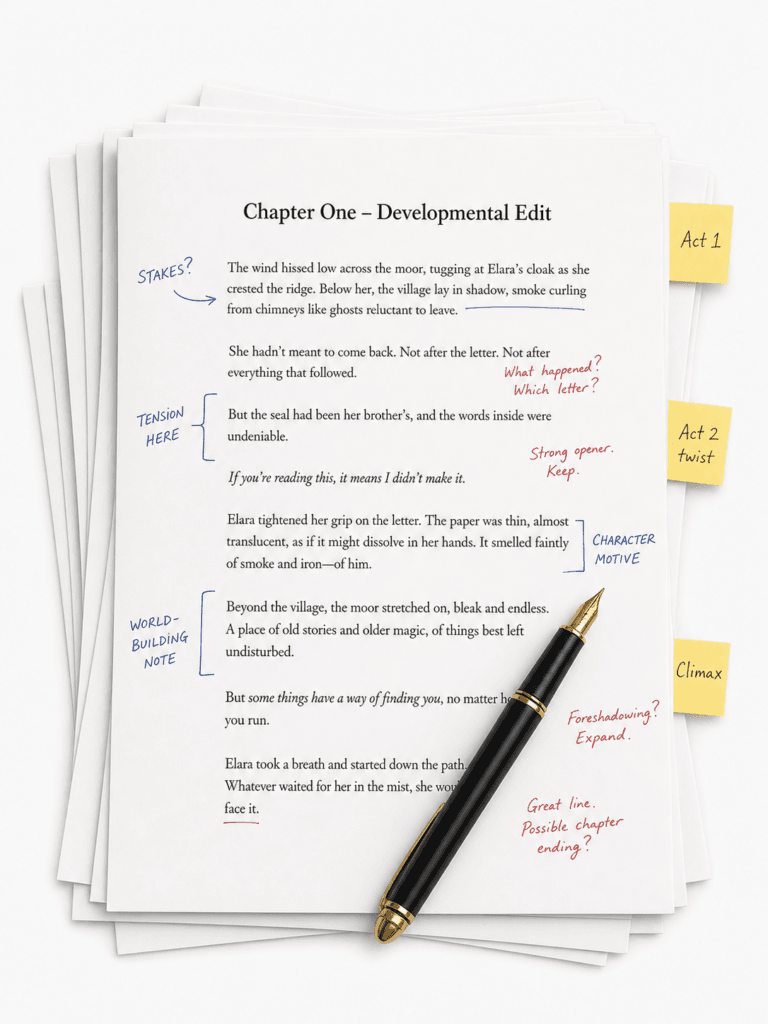
The first kiss is a useful reminder that believing two people could be attracted to each other doesn’t guarantee the reader will feel that attraction building. It can be obvious the hero is supposed to be the love interest and totally not feel the chemistry build. Scenes of hesitation or almost giving in can change the experience for the reader. Yearning, hesitating, and questioning feelings are all part of the dance. I explore how to build the romance alongside the external plot in my guide to writing your first romantasy novel.
A difficult family choice needs preparation, too. To do this, work backwards from the moment you want the reader to believe. Ask things like, what does the character know? What do they misunderstand? What would they normally try before taking the most drastic option? Plant those things in earlier scenes. For a full breakdown on how to find plot holes (or, you know, connect things well), see my blog.
Foreshadowing can also mean hinting at the flaw that makes the choice possible, more than once. Maybe your character is patient with strangers but unfair to family. You need to show that trait in a smaller disagreement before it pops up in a bigger decision. You don’t have to make them likeable in every scene, but you do need to help the reader understand why this particular person acts this way.
If you can’t add more setup to make choices more believable, then make the turning point itself do more work in the fallout. They can defend the choice until they relent or realize what they refused to see in the next big choice that mirrors it. You can see more guides like this in the Writers Hub.
If you’re working through this in your own book, my free Fantasy & Romantasy Novel Outline Tool helps you connect character motivation, relationship beats and the final choice. For communities like the factions, try the Worldbuilding Tool to work through the politics, culture and everyday rules shaping your characters’ lives.
The Sixth Faction FAQ
No. The Sixth Faction is an alternate-universe Divergent novel by Veronica Roth. It revisits Tris’s story from a changed Choosing Ceremony, rather than continuing after Allegiant.
You can start with The Sixth Faction, but I recommend the original trilogy for a fuller feel for the factions and supporting characters. Reading Divergent, Insurgent and Allegiant also makes the comparisons in this review more meaningful.
Yes, in my opinion. I found it fast-paced and addictive, with a more convincing picture of Abnegation. I wanted more romantic tension and stronger supporting-character development, but I finished wanting the next book.
No. It is the opening book of a new Divergent duology. My Divergent book-five guide covers the sequel and release information.
The opening verdict, romance discussion and faction impressions avoid major plot spoilers. The section labelled “Spoilers” discusses major events in The Sixth Faction and the original trilogy, including Allegiant’s ending.