
You can first find agents through current agency websites, recent books, acknowledgements, deal and client history, QueryTracker, and Manuscript Wish List. The best way to use these is to find every promising name through those sources, then check the LIVE agency website before you create your final checklist and start querying.
That saves an astonishing amount of grief because sometimes agents are not accepting submissions, or the information is old. As a heads-up, agent lists age quickly. People move agencies, close to submissions, change categories, and stop wanting the exact trope they begged for in an interview three years ago. Because…the market changes.
If you want all the deets on How to Write a Query check this out for all the other tips see the Writers hub.
What should I know about my fantasy novel before searching for agents?
Write down the age category, fantasy subgenre, romance weight, approximate word count, tone, and likely readership. Fantasy on its own is huge, like, really huge. Adult court romantasy with a central enemies-to-lovers relationship and commercial pacing gives me something to actually research for your query. So know your market place. And to do that? Read, read, read.
You also want two or three possible comparison titles to throw into the letter. They will point the agent towards the shelf you actually belong on and help them picture how they’re going to pitch you to a publisher. Once you have the agent list and comps together, the no-AI query letter builder gives you somewhere to pull the actual package into shape.
How do I use QueryTracker to find literary agents?
You can use QueryTracker to discover agents, organize the list, track dates, and notice practical details you need to confirm somewhere official, like socials or a website. I would never choose an agent because a request-rate percentage looks pretty on the list, in fact, it’s probably a red flag. A selective agent with a narrow list may look scary and still be the person who understands exactly your book and where it belongs and who wants to buy it.
Search the correct category, open promising profiles, and move names into your own sheet, or tracker to research later.
How do I use Manuscript Wish List to find fantasy agents?
Search Manuscript Wish List for the actual ingredients of the book, like gothic fantasy, political romantasy, queer fantasy romance, monster romance, dragon riders, difficult women, or whatever the manuscript is trying to sell. Then read the full profile because dark fantasy can describe several different shelves, and you really want to get this right.
The wishlist match will give you a reason to research somebody, but don’t get too excited as again, it may be old info. Go to the source and collect all the things, like who they represent, why, and how they can be the best fit for you.
Can recent fantasy books help me find literary agents?
Listen, read acknowledgements in recent books that share the manuscript’s readership, tone, structure, or commercial lane. You’ll start to see patterns. Authors often thank their agents. It’s super helpful.
Then check where the agent works now and whether they still represent that category. Acknowledgements are historical evidence that the agent can do the thing, you know, get the book sold and understand the genre.
Also look at agency client pages and recent deal announcements. Care about the work around the agent, especially when the person is newer, because they’re up and coming and you both have a dream. A newer agent inside a respected agency with good mentorship may have more time and hunger than an established name with a packed list. They’re a dream agent that I’d probably wait to query in the second or third batch.
What should I check on a literary agency website?
The agency website should confirm that the agent works there, represents the correct age category, accepts submissions, and wants the materials you plan to send. It should also explain whether the agency allows several agents to be queried at once or asks writers to choose one.
I follow those instructions when a directory says something different. The agency owns the inbox. They get to decide whether they want five pages, ten pages, a synopsis, a form, or a sacrifice under the full moon. Hopefully not the last one.
Check the page again on submission day. A spreadsheet researched in January can be wrong by March, which is deeply rude of time but there we are.
How do I know whether a literary agent is a good fit?
The agent represents the correct age category and a close branch of fantasy. Their interests connect to the emotional and commercial centre of the manuscript. Their current work, clients, experience, or agency support can be checked. They are open, and their requirements are current. I can explain the match in one honest sentence.
That sentence matters more than decorative personalisation. ‘You represent dark fantasy with central queer romance, and I was interested in your call for ambitious relationships inside dangerous worlds’ tells me something. ‘I saw you like coffee’ tells me we live on Earth.
I also want to know what kind of career the agent appears to build. A perfect wishlist line means less when the agency’s books, communication, or professional record gives me pause.
How can I avoid literary agent scams?
A legitimate literary agent earns commission when they sell rights. Reading fees, required paid editing, pressure to buy marketing, uncheckable agency details, and huge unsolicited promises deserve scrutiny, and should be avoided like the plague. If you’re going to pay for all that you might as well self publish. New agents can be excellent; the important question is whether their background and support can be verified.
Check professional information through the Association of American Literary Agents and research suspicious approaches through Writer Beware.
Also, verify the email and contact details on the official agency site rather than replying to a surprise message that has discovered my masterpiece and needs money by Friday (complete scam).
What should I include in a literary agent spreadsheet?
Each agent gets a row, think agency, age category, genre interests, relevant clients or books, submission status, required materials, response policy, date checked, and the reason I think the match works. I add a column for concerns because you’re going to be negotiating and comparing.
Sort names into strong fits, possible fits needing more research, and no good so you don’t re-do research you’ve done already. A giant list of everyone who technically accepts fantasy looks productive and usually produces awful rejection data that will make you feel bad in the long run. I would rather have twenty-five names I can defend than seventy names that will cause anxiety from the constant silence.
Once the list is ready, query in batches of around six to eight if you’re an experienced writer and 25-30 if this is your debut.
Can a strong agent list make up for a weak first chapter?
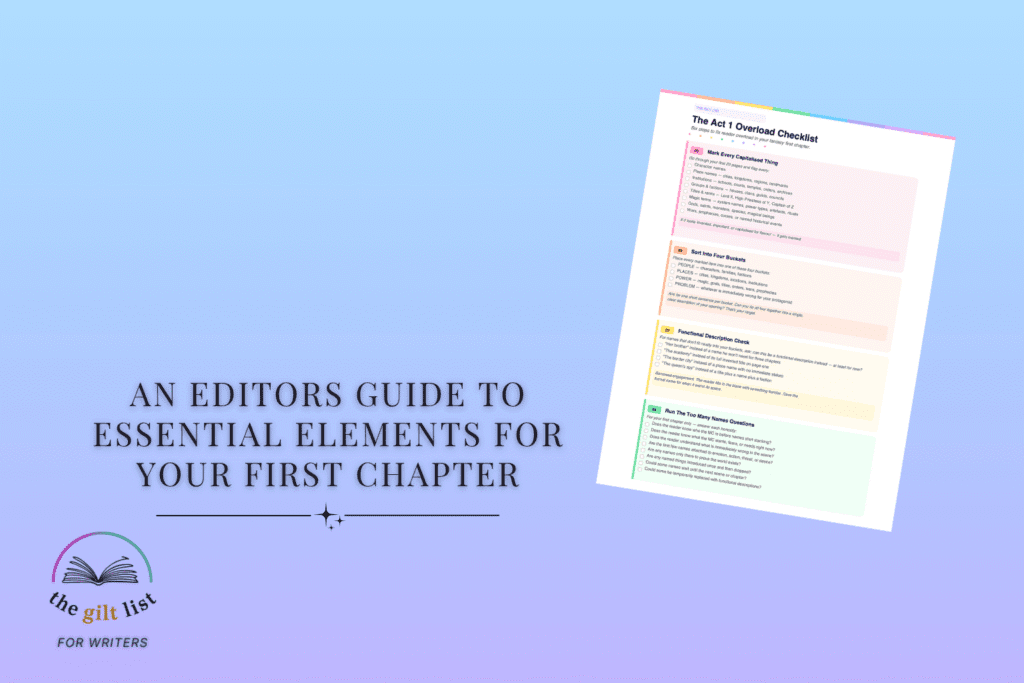
A strong list gives the manuscript a fair hearing but it cannot repair an opening that starts before the story, buries the protagonist under history, or promises a romance-light epic before turning into full romantasy. You have to know your story and know it well to find the right agents. And if you’re asking…but wait, I think I might be somewhere in between a genre, I don’t really know where I fit? You’re not alone. You’re so close to your work it can be hard to tell…you simply see more of it than the reader does. This is a great time to get a first chapter critique, a synopsis critique, or a full manuscript if you’re unsure about the whole thing. A good editor can place you and tell you what is marketable about your book.
Read Why Agents Reject Fantasy First Chapters and Why Am I Not Getting Requests From Agents? before the first batch so you kind of know what to expect.
Which editing service should I choose before querying?
For a writer who wants the opening checked before the first batch, I would recommend my First Chapter Critique. I read the pages for story promise, attachment, clarity, worldbuilding order, pacing, voice, and where it might lose the agent/reader. This service is designed for agent queries, but it’s also designed for that first moment in a book store/e-book where someone starts to read to see if they like it. The goal is to make “keep reading” a no brainer.
When you’re concerned about the whole book, the Fantasy Manuscript Critique gives the manuscript a focused full read and identifies the largest problem worth revising first. Developmental editing is the deeper service for structure, arcs, relationships, pacing, worldbuilding, payoff, and a supported revision plan. This is fantastic if you’re a new writer, a lot of the time you only need this in-depth service once to deeply improve your writing.
How to build a literary agent list
The final spreadsheet should show why each person belongs there, so when it comes time to reach out to them you know exactly why them, and what they’re good at, and when you should or shouldn’t take a next step with them. It’s time dear reader to buy a pretty notebook, or download one of my resources, and get started taking notes. Take your time. The worst would be to find an agent who kind of knows your genre but specializes elsewhere after you have gone through the whole process with them.
Frequently Asked Questions About Finding Fantasy Literary Agents
Where can I find literary agents for fantasy?
Start with current agency websites, QueryTracker, Manuscript Wish List, acknowledgements in recent comparable books, and verifiable client or deal history. Confirm every detail on the live agency page.
How do I find agents who are open to fantasy now?
Check the agent’s agency page on the day you submit. Old lists and directory profiles can lag behind changes.
How do I search for romantasy agents?
Search overlapping terms such as romantasy, fantasy romance, romantic fantasy, adult fantasy, New Adult, and romance with speculative elements. Then read the full profile because the labels vary.
Should I query a newer literary agent?
Yes, when their background, agency support, category fit, and professional record check out. Newer agents may be building their lists and can be excellent advocates.
How many fantasy agents should be on my list?
I care more about defensible matches than a target total. Twenty-five strong names beat seventy vague ones. Keep researching while you query because agents open, close, and move.